3-Axis vs 4-Axis vs 5-Axis Machining Center: When 5-Axis Pays Off
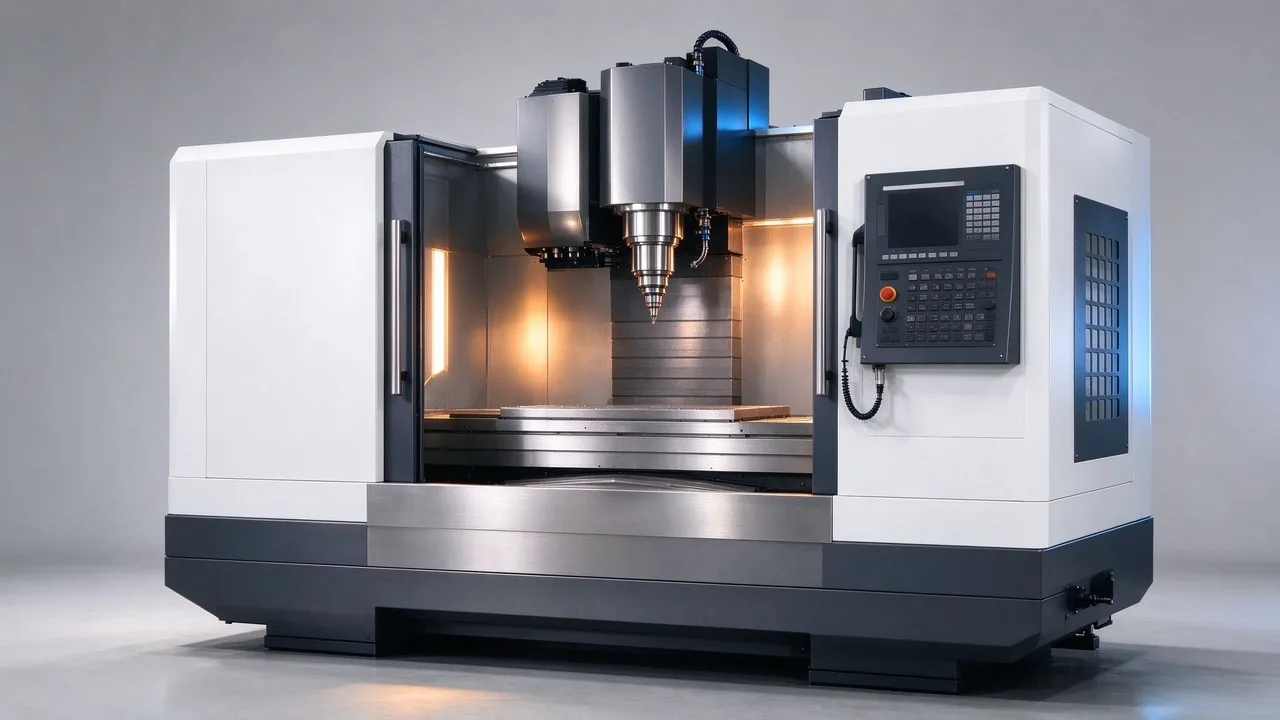
How 3-axis, 4-axis and 5-axis machining centers differ, when a 4th-axis attachment is enough, and when a 5-axis machine genuinely pays for itself.
Sales pages make axis counts sound like a simple upgrade ladder, but paying for five axes you do not need is one of the most common budget mistakes in machining. Here is a plain-language version of what each configuration does, with the maths on when the extra axes actually repay themselves.
Three axes, in plain terms
A 3-axis machining center moves the tool along X, Y and Z. The tool always approaches the workpiece from above, so anything machinable from one top-down direction is a natural fit: plates, pockets, drilled patterns, facing, most brackets and housings. Features on the sides or underneath are possible too, but only by flipping or re-fixture the part, and every flip adds time and tolerance stack-up.
What a fourth axis adds
A fourth axis rotates the workpiece, usually around the X axis, under CNC control. In indexed mode, sometimes called 3+1, the machine positions the part to an angle and then cuts with three axes. That covers bolt circles around a cylinder, cross-holes, keyways, engraving around a shaft and machining several faces in one clamping. For camshafts, spiral flutes and cylindrical cams you need the rotary axis to move while cutting, which is true 4-axis work. A bolt-on rotary table turns many existing 3-axis machines into this class at a fraction of a new machine's price.
What a fifth axis unlocks
A fifth axis lets the tool tilt relative to the workpiece, usually via a swivel head or a trunnion table. With simultaneous 5-axis motion the tool can reach around geometry that no 3-axis machine can touch: impeller blades, blisks, turbine parts, complex mould surfaces, aerospace structural components and medical implants such as hip joints. The tool stays shorter, which improves finish and lets you cut harder materials, and curved surfaces come off the machine without the scalloped steps that 3-axis leaves behind.
The setup-reduction maths
The quiet case for more axes is not the exotic geometry. It is eliminated setups. Take a part that needs three separate fixturing positions on a 3-axis machine. If each setup costs 45 minutes in handling, indicating and proving the first cut, that is 2.25 hours per part before any real machining. One 5-axis cycle replaces it with a single setup, and each removed setup also removes one source of datum error. On a run of 200 parts per month, the saved handling alone approaches 150 working hours per month, often enough to justify the machine difference within a few years, especially for high-value parts where one scrapped workpiece can cost more than the fixture savings.
When 3-axis with a 4th attachment is enough
If most of your work is top-down machining with occasional side features, a solid 3-axis VMC plus a bolt-on rotary table is the right buy. It covers indexed 4-axis work, keeps your investment low, and the rotary can move to another machine later. This describes the majority of job shops honestly, and there is no shame in it. Buy capability you will run every week, not capability that looks impressive.
When a true 5-axis pays off
Five axes earn their price when three things coincide: parts with genuinely complex surfaces or many faces, tight datum relationships that suffer from re-fixturing, and enough volume or part value that setup hours and scrap matter. Aerospace and medical suppliers usually hit all three. A mould shop cutting deep cores and complex surfaces hits at least two. If that describes your order book, VITOP Machinery builds a dedicated 5-axis series for impellers, aerospace parts and complex surfaces, alongside the 3-axis VMCs that cover everything simpler. Send us one of your hardest drawings and we will tell you which side of the line it falls on.
Talk to VITOP Machinery
Planning a machine purchase or need help matching a model to your parts? Send your drawings or questions to vitopmachinery@163.com, or message us directly on WhatsApp: +86 183 1908 0212. You can also browse all machines at www.vitopmachinery.com. We reply within one business day.