Chip Control in CNC Turning: Geometry and Coolant
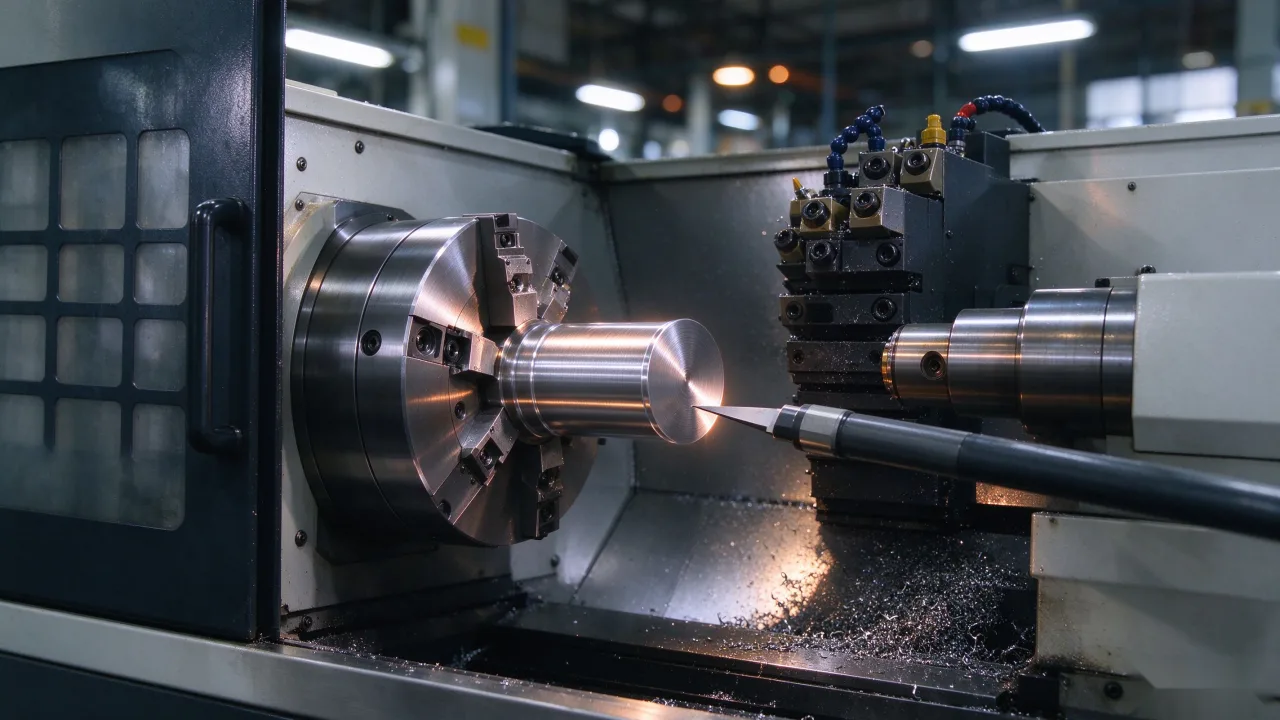
Why chips decide turning productivity: insert chipbreaker geometry, coolant pressure and program tricks that keep strings from ruining the cut.
Nobody buys a lathe for its chips, yet chips decide whether a lathe runs unattended. A stringy winding birdnest wraps the workpiece, drags into the chuck jaws and forces an operator to stop what automation was supposed to do alone.
Controlling the Curl
- Chipbreaker geometry: modern inserts curl and snap chips at designed feed ranges; cutting below that range makes strings.
- Coolant pressure: 20 to 70 bar jets break chips mechanically where geometry cannot.
- Program rhythm: feed modulation and peel-retract cycles give chips a chance to break on long passes.
- Material choice: free-machining grades with added elements snap cleanly; soft pure alloys string.
The feed-versus-chip trade is the classic trap. Slowing feed for surface finish can push chips into stringing, which then ruins the very finish you slowed down for. A better answer is a sharper geometry that breaks chips at lighter feeds.
Our application engineers parameter-test your material before delivery, so the machine arrives with proven chip-breaking recipes rather than hope.
Talk to VITOP Machinery
Questions about this topic or your upcoming project? Email vitopmachinery@163.com or message us on WhatsApp: +86 183 1908 0212. Browse all machines at www.vitopmachinery.com. We reply within one business day.