Injection Mould Base Machining: Flatness, Squareness, Fit
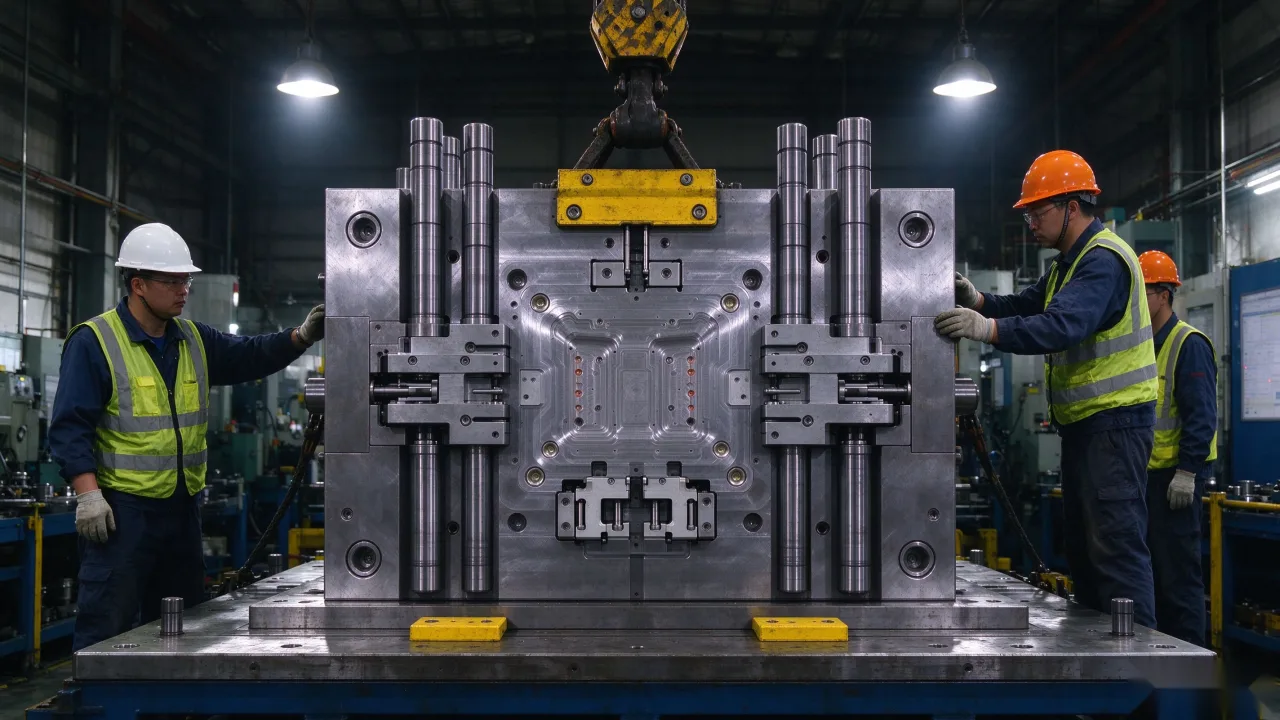
Machining mould bases that close properly: why plate flatness, pocket squareness and parallelism between halves decide mould performance.
A mould base is a precision sandwich. Every plate must sit flat, every pocket square, and both halves parallel within microns, or the mould flashes, galls and wears early. Machining bases well is a machining-center discipline before it is a fitting discipline.
What Makes Bases Close Properly
- Plate flatness machined in, not ground into submission afterwards.
- Pocket squareness held by rigid machines with well-aligned rams.
- Both halves machined in matched, indexed setups wherever possible.
- Coolant channels drilled and plugged without leak paths to parting lines.
Large plates demand large, stiff machines. Sagging tables and deflected rams show up as crowned surfaces that only appear after the mould is bolted shut. A gantry or large-travel VMC with strong table support keeps long plates honest.
We supply machines used by mould makers across Southeast Asia and can share reference parts and tolerance data on request.
Talk to VITOP Machinery
Questions about this topic or your upcoming project? Email vitopmachinery@163.com or message us on WhatsApp: +86 183 1908 0212. Browse all machines at www.vitopmachinery.com. We reply within one business day.