Mould Steel Guide: P20, H13 and S50C Machining Notes
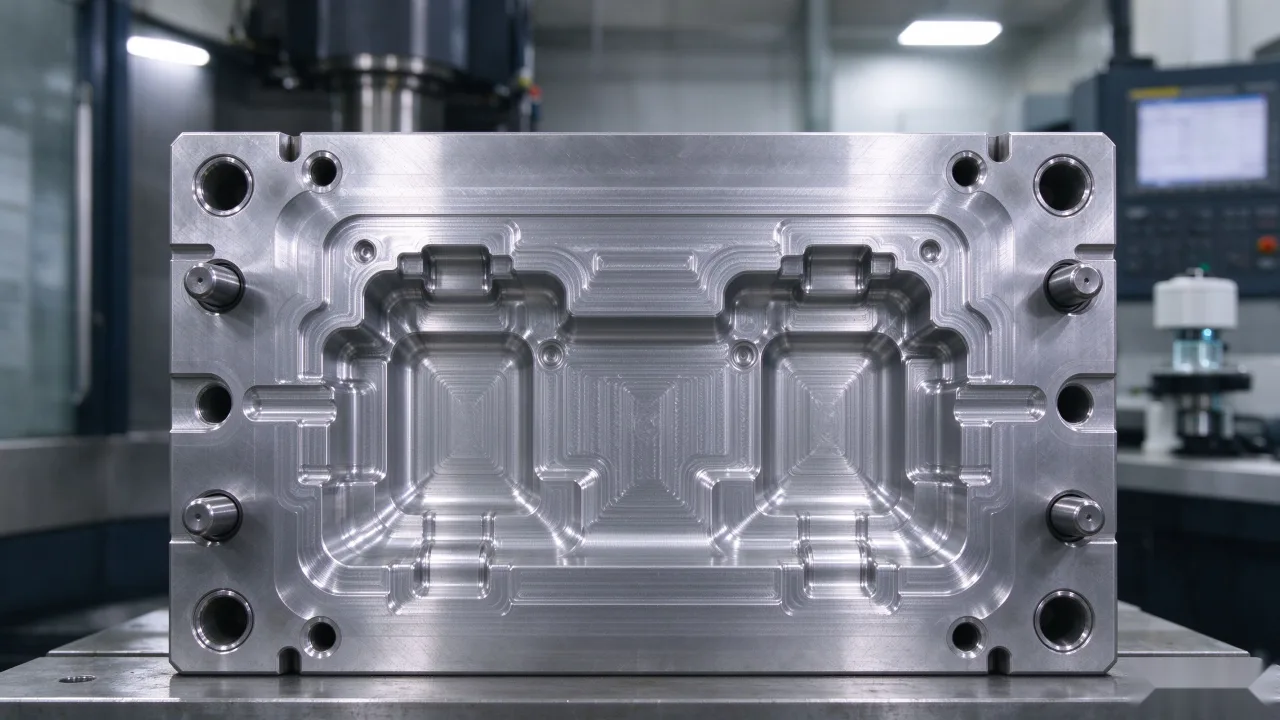
Practical machining notes for the three steels most mould bases use: hardness after treatment, cutting strategies and the machine capabilities each demands.
Three steels dominate mould making, and each machines differently. Pretreated P20 at around 30 HRC is the workhorse for large plastic moulds. Hardened H13 near 48 to 52 HRC serves die casting and hot work. S50C stays soft, cheap and friendly for clamping plates and general bases.
Machining Each Steel
- P20: positive geometries, coated carbide, moderate speeds; watch work hardening on interrupted cuts.
- H13 in hardened state: small depths, high-speed finishing or graphite electrodes plus EDM for detail.
- S50C: fast and forgiving; the machine spends time on size, not difficulty.
Machine demands follow hardness. P20 mould work rewards a rigid, damped VMC with a smooth low-end spindle. Hardened H13 shifts work toward high-speed spindles and light cuts, or toward EDM where detail concentrates. Soft S50C forgives almost everything except poor chip evacuation.
Send us your steel list and cavity sizes, and we will recommend the spindle and structure that matches rather than one machine for all three.
Talk to VITOP Machinery
Questions about this topic or your upcoming project? Email vitopmachinery@163.com or message us on WhatsApp: +86 183 1908 0212. Browse all machines at www.vitopmachinery.com. We reply within one business day.