Positioning Accuracy Classes and the Test Report to Demand
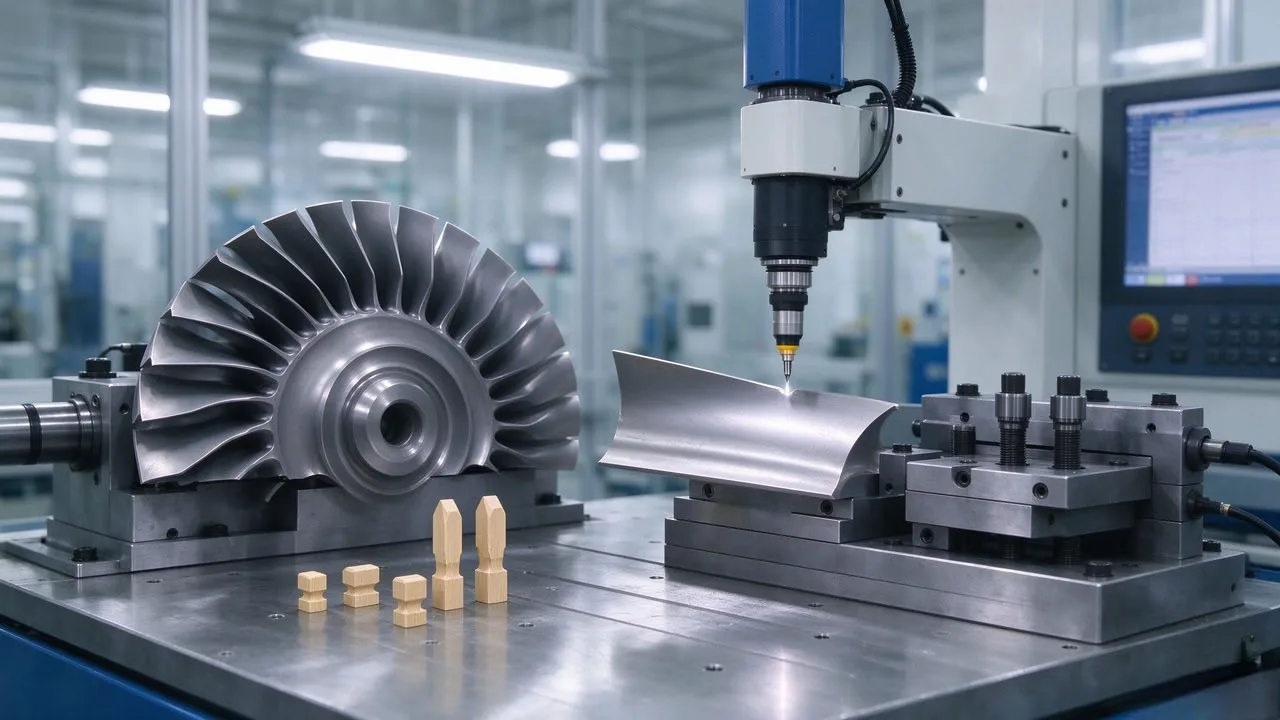
Standard ±0.01-0.02 mm vs precision ±0.005 mm: what positioning accuracy classes mean and why to demand the ISO 10791 report of your machine.
Every machine brochure says high precision. Few buyers ask what that means in numbers, and fewer still ask for proof. If your parts carry real tolerances, positioning accuracy class and the test report behind it deserve more attention than paint colour.
The Two Classes You Will Meet
In the current market, standard vertical machining centers are typically quoted with positioning accuracy of ±0.01 to 0.02 mm. Precision grade machines sit around ±0.005 mm. That difference sounds small. On a mould cavity or a precision part with several critical features, it is the difference between passing inspection routinely and arguing with your customer's gauge.
Note that positioning accuracy and repeatability are different things. Accuracy is how close you land on target; repeatability is how consistently you land in the same spot. A machine can repeat well and still be misaligned. A proper geometric test covers both, plus squareness, straightness and spindle issues.
The Report You Should Demand
Ask for the ISO 10791-series geometric test report of the actual machine you are buying, with its serial number on it. Not a template, not a brochure page, not a report from a sister machine. ISO 10791 defines the test methods for machining centers, and a supplier who tests every machine can hand you the sheet without hesitation.
This single document does more to protect you than any warranty sentence. It gives you a baseline to check against after installation and after any crash or rebuild.
How Accuracy Is Built In, and Kept
Accuracy on delivery is one thing. Accuracy in year three depends on the structure underneath. The details that matter:
- Castings: HT300 resin-sand castings with double ageing treatment relieve internal stress so the structure does not move after installation.
- Guideways: hand-scraped and matched guideways give correct contact geometry that a purely machined surface cannot guarantee.
- Verification: laser interferometry plus ballbar testing on every machine before shipment, which is what we do at VITOP, catches assembly errors before they reach your floor.
A supplier who casts, machines, assembles and inspects under one roof can control all three steps. A supplier who bolts together purchased castings and purchased guideways will struggle to explain a bad ballbar plot.
Match the Class to Your Parts
Do not pay for ±0.005 mm if your drawings say ±0.05 mm. Buy the standard class and spend the difference on tooling and training. But if your tolerances genuinely sit at 5 to 10 microns, insist on the precision grade and on seeing the individual machine's report before it ships. Ask which measurement equipment was used, when the test was done, and whether you may witness a re-test or a videoed test before packing.
Reading the Report Like an Engineer
When the ISO 10791 report arrives, check three things. First, that the serial number matches the machine on your order. Second, the test conditions: ambient temperature and warm-up state affect results, and a machine measured cold will read differently after two hours of spindle running. Third, that all promised lines are filled in, because a report with blank rows is not a report.
Also remember that factory numbers assume a proper installation. Level and anchor the machine correctly, let it reach thermal stability, and consider a re-check on your floor as part of acceptance. Accuracy lost to a rushed installation is not a warranty claim.
What to Put in Your RFQ
- State the positioning accuracy class you require, with numbers.
- Require the ISO 10791-series test report for the actual machine, serial number matched.
- Ask for laser interferometry and ballbar results as separate documents.
- Agree that the report forms part of your acceptance criteria on arrival.
Buyers who ask for these papers tend to get better machines, because the request itself tells the factory you will check. That is exactly the signal you want to send.
Talk to VITOP Machinery
Planning a machine purchase or need help matching a model to your parts? Send your drawings or questions to vitopmachinery@163.com, or message us directly on WhatsApp: +86 183 1908 0212. You can also browse all machines at www.vitopmachinery.com. We reply within one business day.
Need a CNC Machine for Your Project?
Tell us what you need to machine — our engineers will recommend the right model and send a quotation within 24 hours.