Inside a Smart CNC Workshop: How Automation Cuts Lead Time
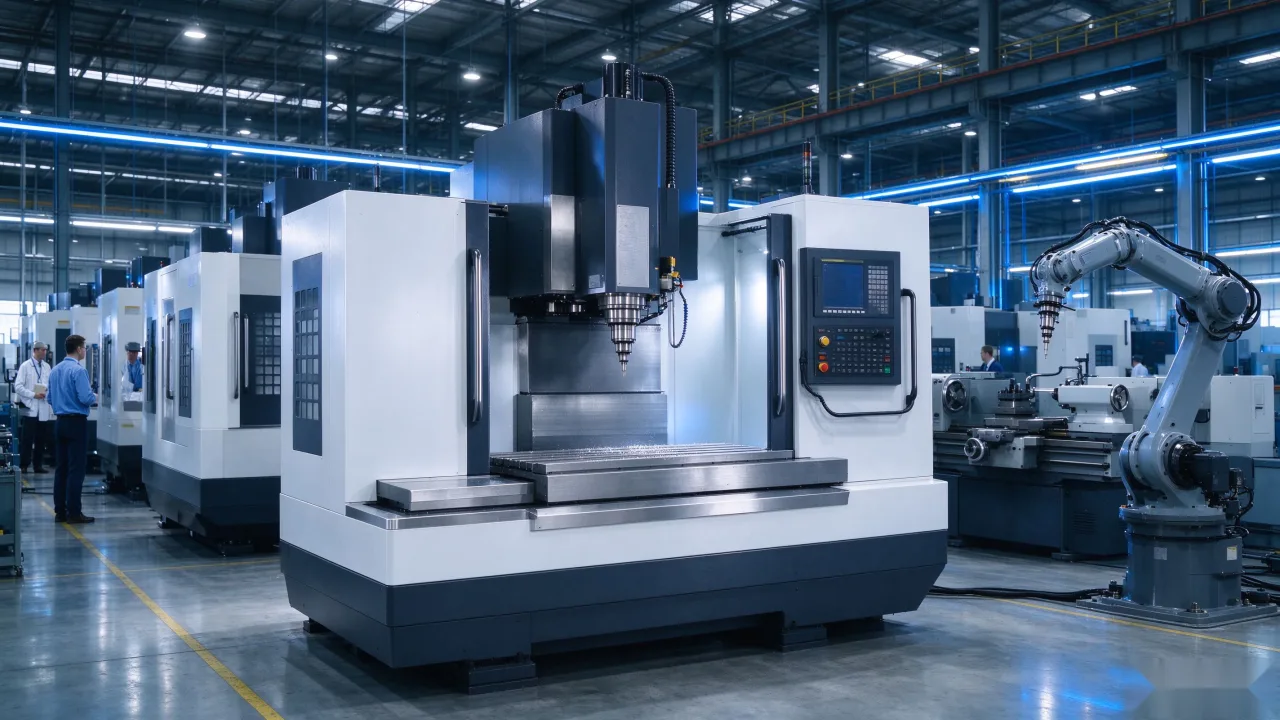
What an automated CNC workshop actually looks like, which parts of the workflow matter most, and where lead-time savings really come from.
Walk into a modern CNC workshop and the first thing you notice is not the machines. It is the flow. Blank storage, pallet preparation, tool presetting, machining, deburring and inspection sit in one connected sequence, so no operator wastes an hour searching for material or a fixture. Automation is less about robots and more about removing waiting time between operations.
Where the Time Goes
On a typical job-shop part, cutting may take only 30 to 40 percent of total lead time. The rest is queuing, fixturing, tooling searches and inspection backlogs. Automated workshops attack the queue first: pallets are prepared offline while machines keep cutting, and tool data is preset and loaded from a central station. Cutting time stays the same, but parts stop waiting.
- Offline pallet and fixture preparation keeps spindles cutting.
- Central presetting removes trial cuts and first-article scrap.
- Linked inspection catches drift before a full batch is wrong.
- Scheduled material kits stop machines starving mid-shift.
For a buyer importing machines, the lesson is to plan the workshop, not just the machine. Reserve floor space for pallet staging, agree on a tooling standard, and ask your supplier to help design the flow. A machine dropped into a badly planned shop will never hit the cycle times quoted on paper.
Talk to VITOP Machinery
Questions about this topic or your upcoming project? Email vitopmachinery@163.com or message us on WhatsApp: +86 183 1908 0212. Browse all machines at www.vitopmachinery.com. We reply within one business day.