Spindle 101: Speed, Power and Bearings for VMC Buyers
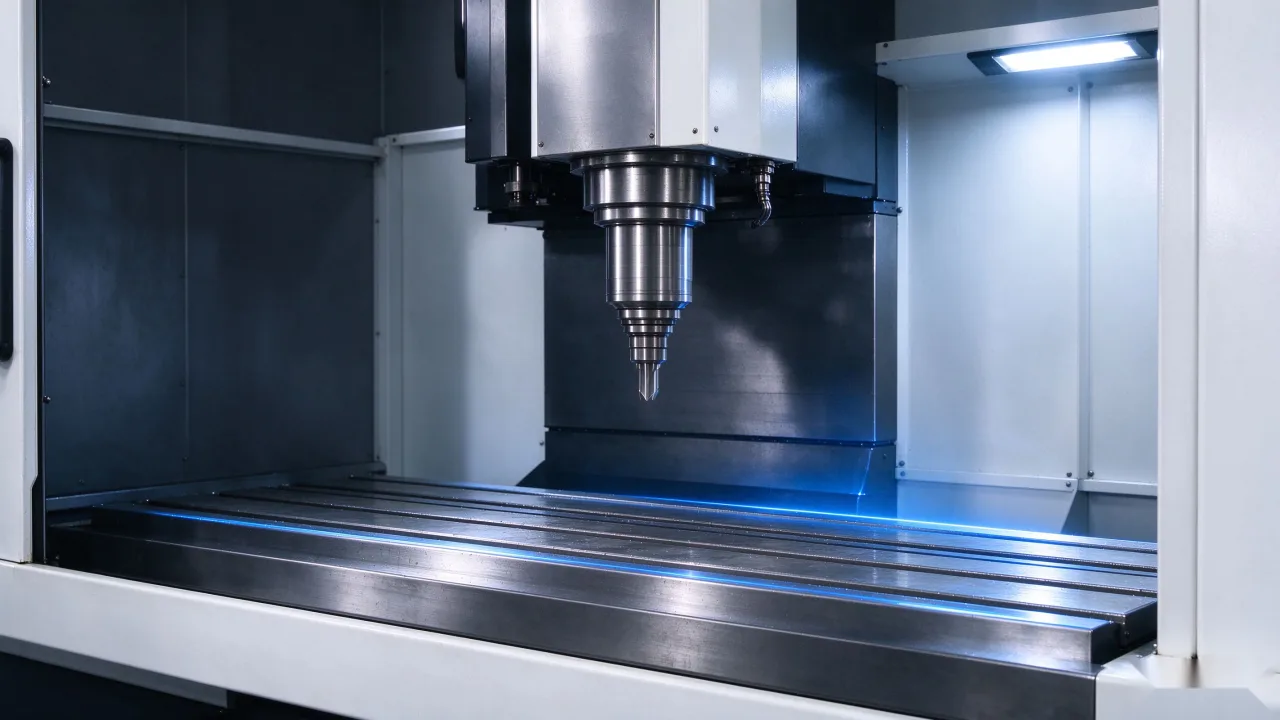
How to read spindle specifications on a vertical machining center, from kW and torque curves to bearing types and realistic RPM.
The spindle is the heart of a vertical machining center, yet spec sheets often hide more than they reveal. A catalogue may claim 12,000 RPM and 22 kW, but the useful number is the torque available at the speed your tools actually run. Aluminium cutters want 10,000 RPM and beyond; mould steels live around 2,000 to 4,000 RPM with high torque.
Reading the Torque Curve
Ask for the full power and torque curve, not a single peak figure. Peak ratings often last seconds. Continuous ratings at low speed matter far more for die and mould work, while high-speed ratings matter for aluminium and graphite electrodes.
- Belt-driven spindles: quiet and economical, limited around 8,000 RPM.
- Direct-drive spindles: higher speed and better finish, less low-end torque.
- Gear-driven spindles: strong low-speed torque for heavy cutting.
- Bearings: grease-packed for general work, oil-air for high speed.
Match the spindle taper to your tooling too. BT40 covers most general work; BT30 suits small high-speed parts; BT50 brings rigidity for heavy mould cuts. Choosing the right combination up front saves costly retrofits later.
Talk to VITOP Machinery
Questions about this topic or your upcoming project? Email vitopmachinery@163.com or message us on WhatsApp: +86 183 1908 0212. Browse all machines at www.vitopmachinery.com. We reply within one business day.