5-Axis Machining for Impellers and Complex Parts: An Introduction
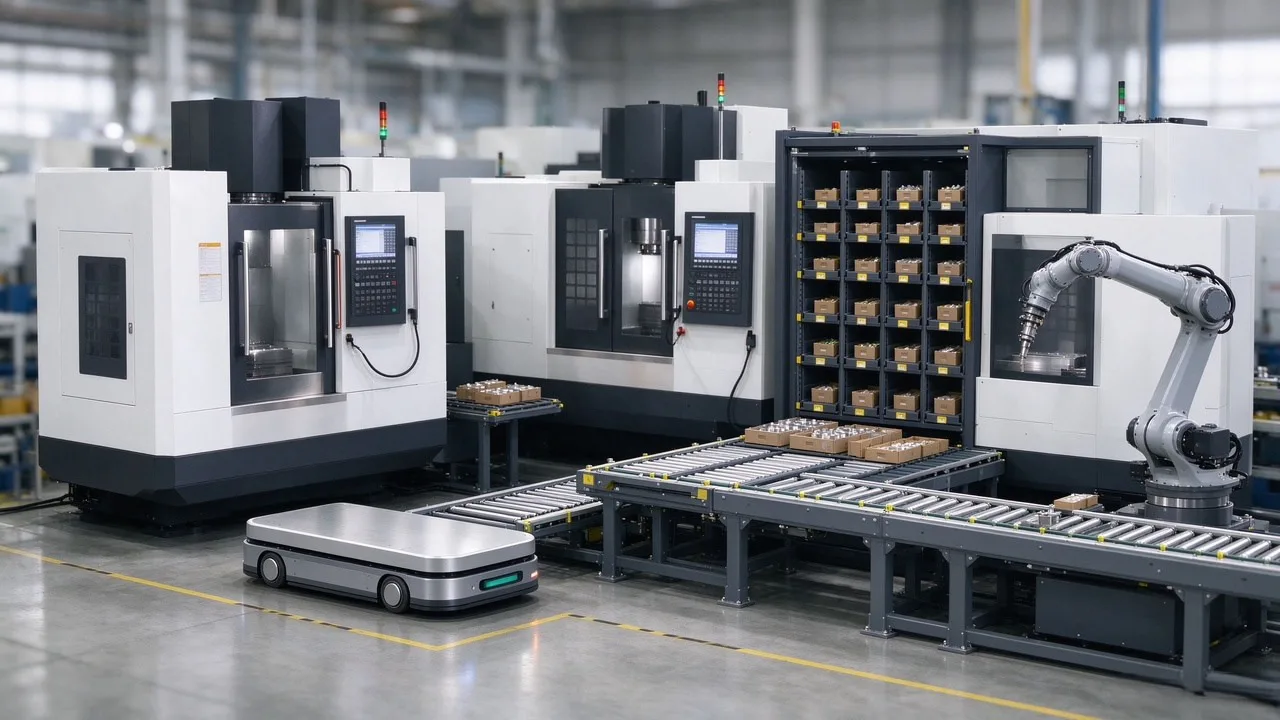
What simultaneous 5-axis machining actually does, which part families justify a 5 axis machining center, and what impeller machining demands before you invest.
Impellers, blisks, turbine blades, complex mould cores: these are the parts that make a three-axis machine look clumsy. If your workshop is starting to quote this kind of work, a 5 axis machining center is probably in your future. This introduction explains what the technology actually does, which part families justify the investment, and what you should know before you buy.
What "Simultaneous 5-Axis" Means
A five-axis machine moves the tool in X, Y plus Z while rotating two additional axes (commonly A and C, or B plus C) at the same time. "Simultaneous" is the key word. A machine that can only position the workpiece at an angle and then cut in three axes is doing 3+2 machining, which is useful but not the same thing.
With simultaneous motion, the tool stays tangent to the surface, uses the shortest tool possible, and reaches features that no fixed setup can expose. Shorter tools cut with less vibration, which directly improves surface finish plus accuracy on thin blades and deep pockets. Fewer setups also mean fewer datum errors accumulating from operation to operation.
Part Families That Justify the Machine
In practice, three families of work drive most five-axis purchases:
- Impellers and blisks. Impeller machining is the textbook case. Curved blades flow from a central hub with almost no flat surface anywhere. A five-axis machine sweeps the tool along each blade in one continuous path; a three-axis machine would need dozens of setups and would still struggle with the root fillets.
- Aerospace structural parts. Thin-walled frames, ribs plus housings with pockets on several faces. Five-axis cutting reduces the number of re-clamps, and every re-clamp you remove removes a stacking error.
- Complex surfaces. Mould cores and cavities with blended contours, medical implants, marine propellers. Wherever a surface changes direction continuously, five-axis finishing paths are shorter, smoother plus faster.
If your parts have none of these features, be honest with yourself: a well-specced three-axis vertical machining centre may serve you better for the money.
The Programming Reality
Five-axis is as much a software and skills investment as a machine purchase. You will need CAM software with true simultaneous five-axis toolpath generation, and a programmer who understands collision avoidance, tool tilt strategies plus machine kinematics. Post-processors are machine-specific, so confirm the supplier can deliver a proven post for the exact model you buy.
Expect a learning curve of months, not weeks, for your first simultaneous jobs. Simulation software helps enormously, and many shops start by running the machine in 3+2 mode while their programmers build confidence. Budget for training as deliberately as you budget for the machine itself; an unused fifth axis is an expensive ornament. If you employ a good CAM programmer already, ask how much five-axis-specific training they still need, and get the supplier to spell out what is included.
What to Weigh Before Buying
- Work envelope vs part size. Trunnion-style machines suit smaller impellers and medical parts; larger rotary heads and tables handle aerospace structures.
- Rigidity and thermal stability. Five-axis cutting is often light and fast. Cast iron structures, hand-scraped plus matched guideways, and thermal compensation separate serious machines from marketing sheets.
- Verification. Ask whether every machine is laser-interferometer and ballbar tested before shipment, and whether you receive the reports.
- Support. Five-axis work needs good applications help. Ask who commissions the machine, who trains your programmers, and how fast spares arrive.
VITOP Machinery builds a dedicated five-axis machining centre range for impellers, aerospace parts plus complex surfaces, alongside vertical, horizontal, gantry plus lathe lines, with 13+ years of manufacturing experience and a 30,000 m2 production base behind it. If you are weighing your first five-axis purchase, send us a drawing of your hardest part plus we will talk through it honestly.
Talk to VITOP Machinery
Planning a machine purchase or need help matching a model to your parts? Send your drawings or questions to vitopmachinery@163.com, or message us directly on WhatsApp: +86 183 1908 0212. You can also browse all machines at www.vitopmachinery.com. We reply within one business day.