What Equipment Does Car Door Mould Machining Really Need
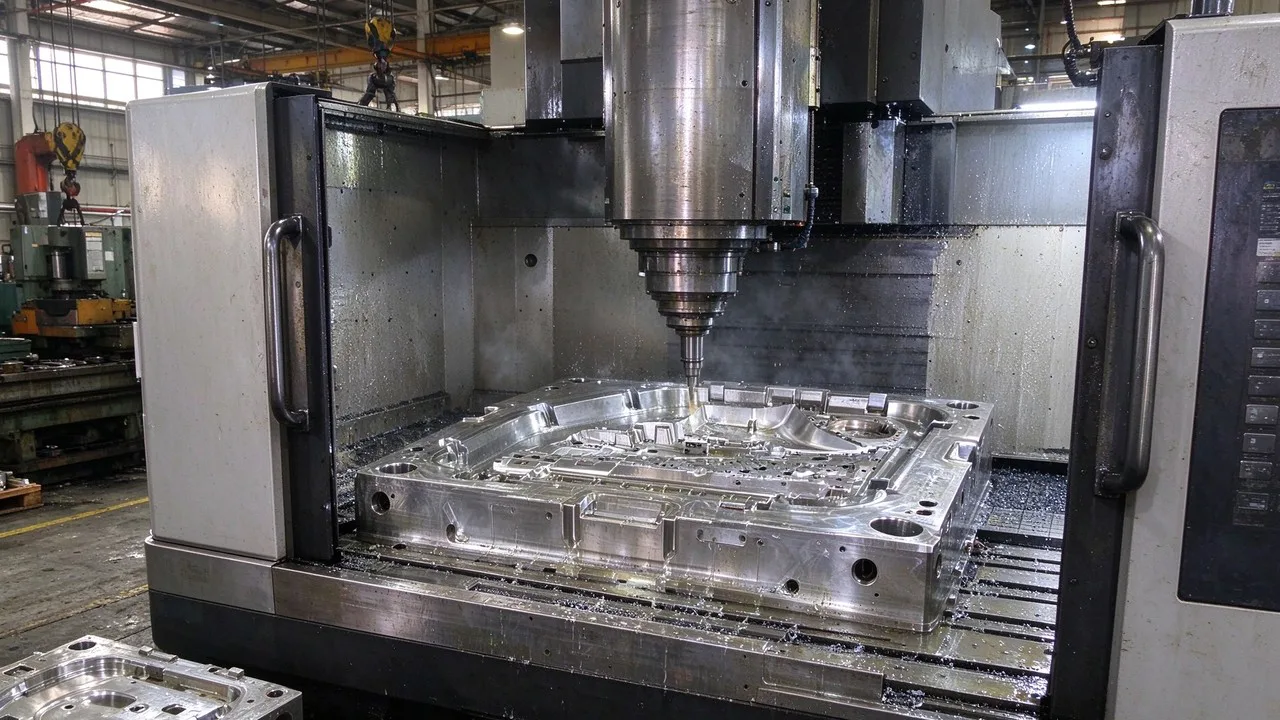
A car door die is a large, deep, multi-surface tool. Here is the equipment a door mould shop actually needs, from gantry mills to inspection.
A car door looks simple on the outside. The tool that stamps it is not. A complete door die set - draw die, trim die, flange and pierce dies - is measured in tonnes, not kilograms, and the machining equipment behind it decides whether the panel comes out clean or wavy. If you are building or upgrading a die shop for door tooling, here is what the equipment list really looks like.
Long travels come first
A full-size door draw die sits on a base plate well over two metres long. That pushes you toward a gantry machining center or a large-format vertical machine with X travels of 2,000 mm or more. The critical point is not just fitting the die on the table. It is finishing the whole working surface in one setup, because every re-clamp on a Class-A surface introduces a matching mark you will spend hours blending out by hand.
Rigidity beats speed for draw dies
Door dies are cut from large castings, and most of the roughing happens in hardened or semi-hardened steel. This is heavy, continuous milling. A machine built for the job starts with a heavy cast iron base - we machine HT300 resin-sand castings with double ageing treatment precisely because a light frame chatters long before the tool does. Box-way or heavy roller guideway construction, a geared head spindle with real low-end torque, and a rigid boring head matter more here than a high rpm figure.
Finishing the surface
After roughing, the door surface is finished with ball-nose tools in fine steps. This is where spindle runout, thermal stability and consistent feed control show up directly on the panel. Machines dedicated to finishing are usually kept for light cuts only, and many die shops separate roughing and finishing machines entirely. If your budget forces one machine to do both, buy the more rigid one, not the faster one.
Options that pay off on door tooling
A right-angle head reaches into window frames and flange steps that a vertical spindle cannot. A fourth axis or rotary table helps with binder surfaces. Through-spindle coolant and a chip conveyor keep long steel chips from being re-cut into the surface. None of these are exotic; they are the options we fit most often on customer-ordered machines for die work.
Do not skip the inspection step
Every machine leaving our floor is checked with laser interferometry and ballbar testing before shipment. For mould and die work this is not paperwork. Positioning error and circularity error transfer straight into the die surface, and once the die is in the press, you inherit them for every panel stamped that year.
Talk to VITOP Machinery
We build gantry and vertical machining centers used for car door, bonnet and roof dies, and we configure each machine around the dies you cut. Send your typical die sizes to vitopmachinery@163.com or WhatsApp +86 183 1908 0212, and we will propose a configuration. Machines and details at www.vitopmachinery.com.
Need a CNC Machine for Your Project?
Tell us what you need to machine — our engineers will recommend the right model and send a quotation within 24 hours.