Casting to Assembly Under One Roof: Why Accuracy Holds
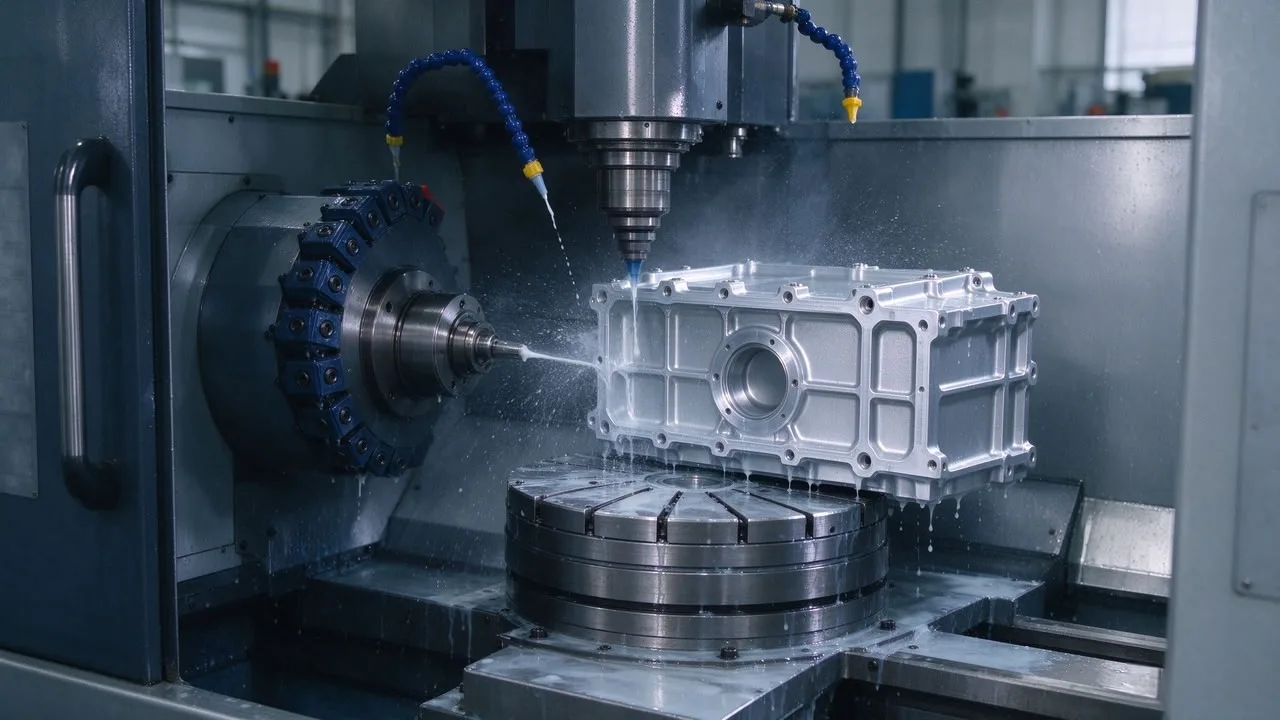
Machine accuracy is decided long before final testing. Casting, ageing, machining plus scraping under one roof is why a custom CNC machine holds its geometry.
When two machines with identical spec sheets behave differently after a year, the reason is almost never the controller or the paint. It is the foundation: the casting, its ageing, and the way the machine was built on top of it. That is why the distance between casting and assembly matters more than most buyers realise.
The Casting Sets the Ceiling
No amount of final adjustment lifts a machine above the quality of its casting. VITOP machines start in HT300 grade iron, a higher-grade engineering cast iron chosen for its stiffness and damping, poured in resin-sand moulds. Resin sand gives a denser, more uniform structure than ordinary green-sand casting, which matters on beds and columns where vibration damping decides surface finish on your parts.
Every casting then passes through double ageing treatment: one cycle to relieve the stresses from casting, and a second after rough machining to release the new stresses those cuts created. A casting that skips proper ageing keeps deforming in service. The machine drifts, and the operator spends the next two years chasing squareness with compensation values.
Machining the Foundation In-House
After ageing, base parts are machined on the same site. Keeping datum faces under one roof closes a quality loop that breaks easily with outside suppliers. If a bed comes out of the machining shop with an issue, the fitters who will scrape and assemble it find out the same day, not after a shipment from another province. On custom machines, where one-off dimensions are common, that feedback speed is worth real weeks.
Hand-Scraped, Matched Guideways
Assembly starts with scraping. A fitter applies spotting blue, brings the surfaces together, and reads the contact pattern. High spots are scraped away, and the cycle repeats until the bearing points are dense and even. Guideways are scraped and matched in pairs, so the saddle sits on the bed the way it will sit for the machine's whole life.
Scraping looks primitive next to CNC machining centers, but it solves a problem machining alone cannot: it creates tiny oil-holding pockets and true line contact between mating surfaces. Heavy cuts stay stable, and the machine loses less accuracy to wear. Buyers sometimes ask whether scraping can be replaced by full machine-guideway grinding. Grinding reduces the work, but the final matching pass is still done by hand on our machines, because scraping leaves the oil pockets and contact pattern that grinding alone cannot produce.
One Roof Means One Quality Loop
When casting, machining, scraping, assembly and inspection happen in one place, three things follow:
- Traceability. A geometry problem on the final test traces back to the step that caused it. There is nobody else to blame and nothing gets patched over.
- Consistency on repeats. When you order a second or third custom machine, the same people, records and fixtures produce it.
- Honest verification. Every machine is laser-verified with interferometry and ballbar testing before shipment, so the report reflects the actual machine, not a family average.
How to Verify This at a Supplier
Ask for the evidence, not the claim:
- Ask which casting and ageing steps happen in-house, and request records for your machine's casting.
- Ask how guideways are finished. "Hand-scraped and matched" should come with a description of the spotting process.
- Ask for the laser interferometry and ballbar reports of the actual serial number you are buying.
Accuracy is not added at the end of a build. It is protected at every stage from the pour to the final test, and a factory that controls every stage is the safest place to order a machine that must hold tolerance for a decade.
Talk to VITOP Machinery
Planning a machine purchase or need help matching a model to your parts? Send your drawings or questions to vitopmachinery@163.com, or message us directly on WhatsApp: +86 183 1908 0212. You can also browse all machines at www.vitopmachinery.com. We reply within one business day.
Need a CNC Machine for Your Project?
Tell us what you need to machine — our engineers will recommend the right model and send a quotation within 24 hours.