CNC Dividing Head: Add a Fourth Axis to Your Machining
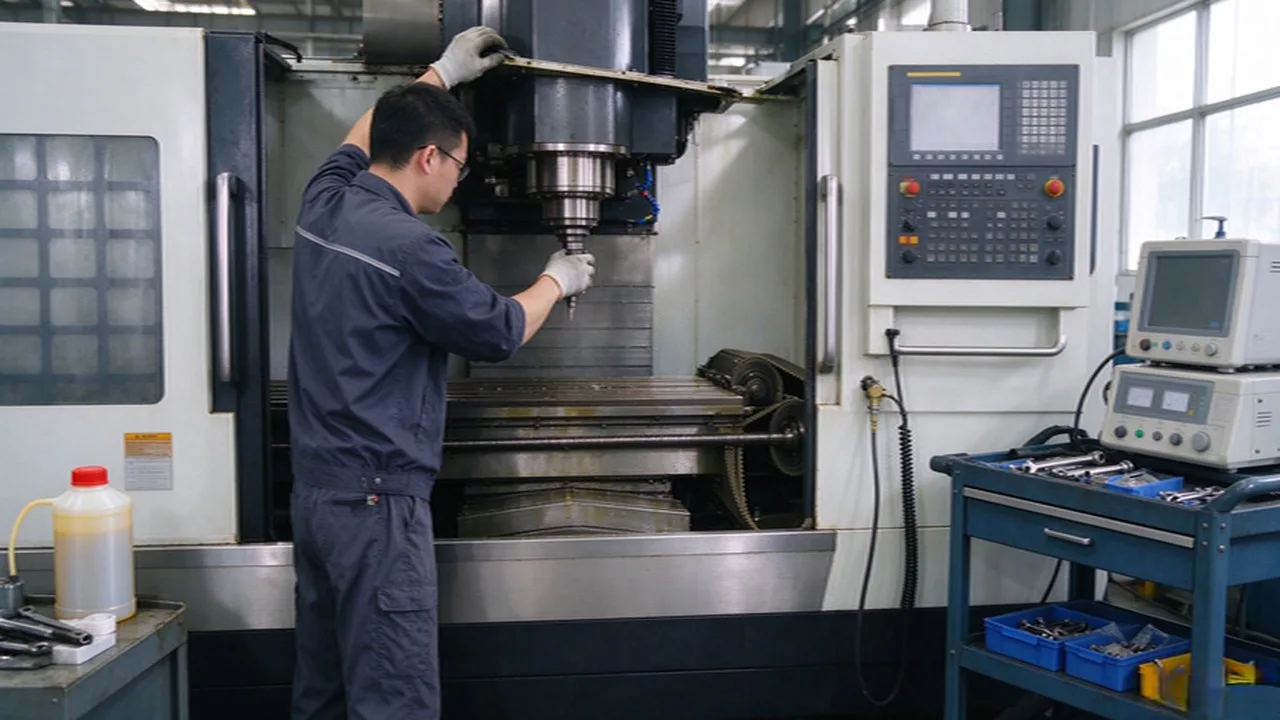
A servo-driven CNC dividing head turns your machining center into a 4th-axis machine for rotary and indexed machining. Applications, setup plus selection advice.
Many parts do not want three axes. Flutes, radial holes, gear teeth, cam profiles and features spaced around a cylinder all need the workpiece to rotate while the cutter works. A CNC dividing head, also called an indexing head or 4th axis, does exactly that. VITOP offers a servo-driven CNC dividing head as optional equipment, turning a standard vertical machining center into a machine for rotary and indexed machining.
What the Servo Drive Changes
An old-style dividing head needed index plates and a hand crank. A servo-driven dividing head is a controlled axis, just like X, Y or Z. The control positions it to the degree or even fractions of a degree, and it can rotate continuously under program control while the spindle mills. That means two working modes:
- Indexed machining: the head rotates to an angle, locks, and the machine cuts a feature. Think six flats on a fitting, or holes drilled around a flange.
- Continuous rotary machining: the head rotates during cutting, so you can machine helical flutes, cams or engravings wrapped around a cylinder.
Key Specifications
| Item | Detail |
|---|---|
| Type | CNC dividing head (4th axis) |
| Drive | Servo |
| Application | Rotary and indexed machining |
Typical Applications
Shops use the dividing head for cutting oil grooves and keyways on shafts, milling flutes on tools, drilling bolt circles, cutting spur gear teeth, engraving around rollers, and machining several faces of a part in one clamping. The last one matters most for batch work: instead of four setups with four chances for error, you clamp once and let the axis index.
Setup Notes From the Shop Floor
- Set the centre height accurately. The part axis must align with the rotary axis, or your diameters change as the head turns.
- Indicate the head body parallel to the X axis before machining.
- Use a tailstock for long or heavy parts so the work cannot lift under side loads.
- Keep the 4th-axis work offset separate and record it. If the head is removed and refitted, re-indicate before running old programs.
- Watch the working envelope. A rotating part sweeps a cylinder; check the tool, the table and the enclosure before the first dry run.
Ordering It With the Machine
A dividing head adds mass to the table and one more axis to the control, so it is best specified with the machine rather than bolted on later. Tell us your part diameter, length and weight, and we will match the head to the machine. VITOP machines ship with every axis laser-verified, and the rotary axis is set up and tested before the machine leaves the factory, so the 4th axis is ready when the machine reaches your floor.
Indexed Versus Continuous: Choosing the Working Mode
Decide early whether your parts need indexed positions or true continuous rotation, because it affects programming and cycle time. Indexed work is simpler: the head steps through angles, and each feature is cut with standard 3-axis moves. Continuous work needs the control to blend the rotary axis with linear axes, which is well within a modern control but asks more of your CAM post-processor. For helical milling and wrapped engraving, continuous is the only option.
Budget for the drive ratio too. A rotary axis trades torque against speed, and heavy parts turning under cutting load need that torque. As a rule of thumb, the larger the part diameter and the heavier the workpiece, the more you will value a solid indexing platform over a fast but light one. Tell the supplier both the part and the operation, not just the diameter.
Talk to VITOP Machinery
Planning a machine purchase or need help matching a model to your parts? Send your drawings or questions to vitopmachinery@163.com, or message us directly on WhatsApp: +86 183 1908 0212. You can also browse all machines at www.vitopmachinery.com. We reply within one business day.
Need a CNC Machine for Your Project?
Tell us what you need to machine — our engineers will recommend the right model and send a quotation within 24 hours.