CNC Machine Installation Checklist: Power, Foundation and Air
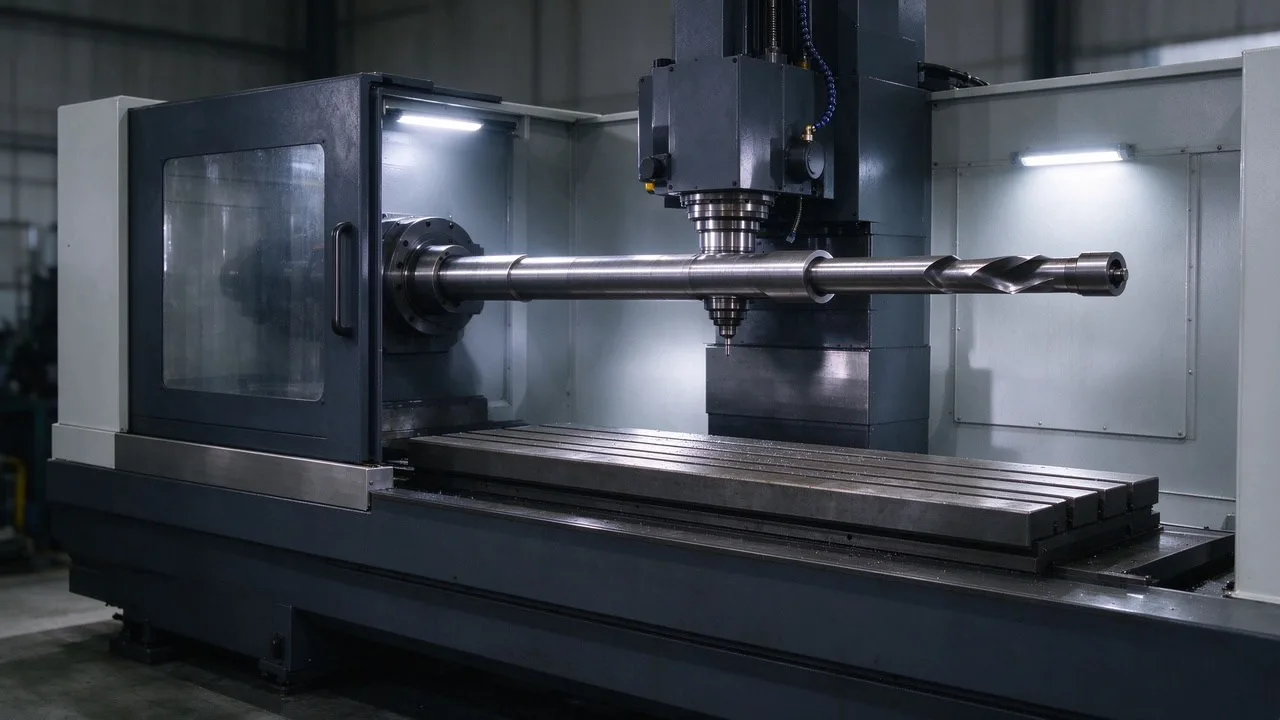
A practical CNC machine installation checklist: floor and foundation preparation, three-phase power matching for Thailand plus Indonesia, compressed air, coolant setup plus anchor planning.
Most CNC machine problems in the first year trace back to installation, not to the machine. A floor that was never levelled, a phase wired backwards, or an air line full of water will cost you weeks of frustration and can void warranty claims. This CNC machine installation checklist covers what to prepare before the truck arrives. Your supplier's manual is the final word on numbers, but the sequence below applies to almost any VMC or lathe.
Start with the Foundation and Floor
A machining centre of 5 tonnes or more needs a proper industrial floor: reinforced concrete, no hollows, and thick enough that the machine does not rock. Check these points:
- Slab thickness and condition. Concrete should be cured well past its initial set, ideally weeks old, with no visible cracks near the machine position.
- Leveling pads or anchors. Most machines sit on adjustable leveling pads; anchor bolts come into play on machines with aggressive moving masses such as large gantries.
- Clearance. Leave room on the door side for part loading, and above the machine for crane access during uncrating. Do not forget the chip conveyor and coolant tank footprint if you ordered them.
Levelling is done with a precision level on the table, following the manufacturer's sequence in the manual. Do it again after two to four weeks of running, because pads settle. A machine that is even slightly twisted will show as a taper or a poor surface finish that no operator can program away.
Three-Phase Power: Match Voltage and Frequency First
This is where imported machines catch buyers out. Before ordering, confirm your supply matches the machine's electrical spec, and note that some factories can configure the machine for your market if you tell them at the order stage.
- Thailand: industrial power is 380V at 50Hz, the same as China, so a machine ordered from a Chinese factory with standard electrics matches the supply. You still need the right breaker sizing, cable cross-section plus earthing per local code.
- Indonesia: standard single-phase voltage is 230V at 50Hz, single-phase sockets plus plugs must meet Indonesian standards, and industrial three-phase machinery needs to be wired accordingly. Discuss the machine's electrical configuration with your supplier before shipment so the control cabinet matches your supply, and budget for a licensed local electrician to handle the final connection.
Check phase rotation with a meter before energising the spindle for the first time. Swapped phases can run a coolant pump backwards and confuse axis direction protections.
Compressed Air: Clean, Dry and Sized
Almost every CNC machine uses compressed air for the tool changer, spindle air purge plus pneumatic clamping. Most vertical machining centres want clean, dry air at a typical pressure around 0.6 MPa (6 bar); always confirm the exact figure in your machine's manual. What kills machines is not pressure but moisture and dirt:
- Fit a filter-regulator at the machine inlet, plus a dryer upstream if your compressor line runs through a humid plant, which in tropical Southeast Asia it will.
- Size the compressor so the machine's consumption is a small share of total capacity, not the whole thing.
- Blow out new pipework before connecting the machine. Swarf and scale from installation wreck air valves.
Coolant Setup
Fill the tank with the coolant the machine's manual specifies, mixed at the concentration on the concentrate label, not by eye. Use clean water; hard or brackish water shortens emulsion life dramatically, which matters even more in hot climates. Prime the coolant pump, check flow direction through the nozzles, and verify the tank level sensor alarms work before the first cut. If you ordered an automatic chip conveyor, test its rotation plus overload trip now too.
Anchor and Leveling Plan: Do It Once, Do It Right
Plan the anchoring before the machine lands. Mark the footprint on the floor, confirm pad or anchor positions against the foundation drawing, and keep the lifting points plus fork pockets accessible for the crane crew. On delivery, uncrate, lift from the correct points, set the machine on its pads, level it, then run a warm-up plus a test cycle before cutting real parts. Log the level readings on day one so you have a baseline to compare against later.
Good site preparation costs a fraction of a downtime week. If you are unsure about any requirement, send your supplier the site photos plus floor drawings before the machine ships; a manufacturer like VITOP can confirm the foundation and utility requirements for the exact model you ordered.
Talk to VITOP Machinery
Planning a machine purchase or need help matching a model to your parts? Send your drawings or questions to vitopmachinery@163.com, or message us directly on WhatsApp: +86 183 1908 0212. You can also browse all machines at www.vitopmachinery.com. We reply within one business day.