Collaborative Robots and CNC Machines: A Practical Pairing Guide
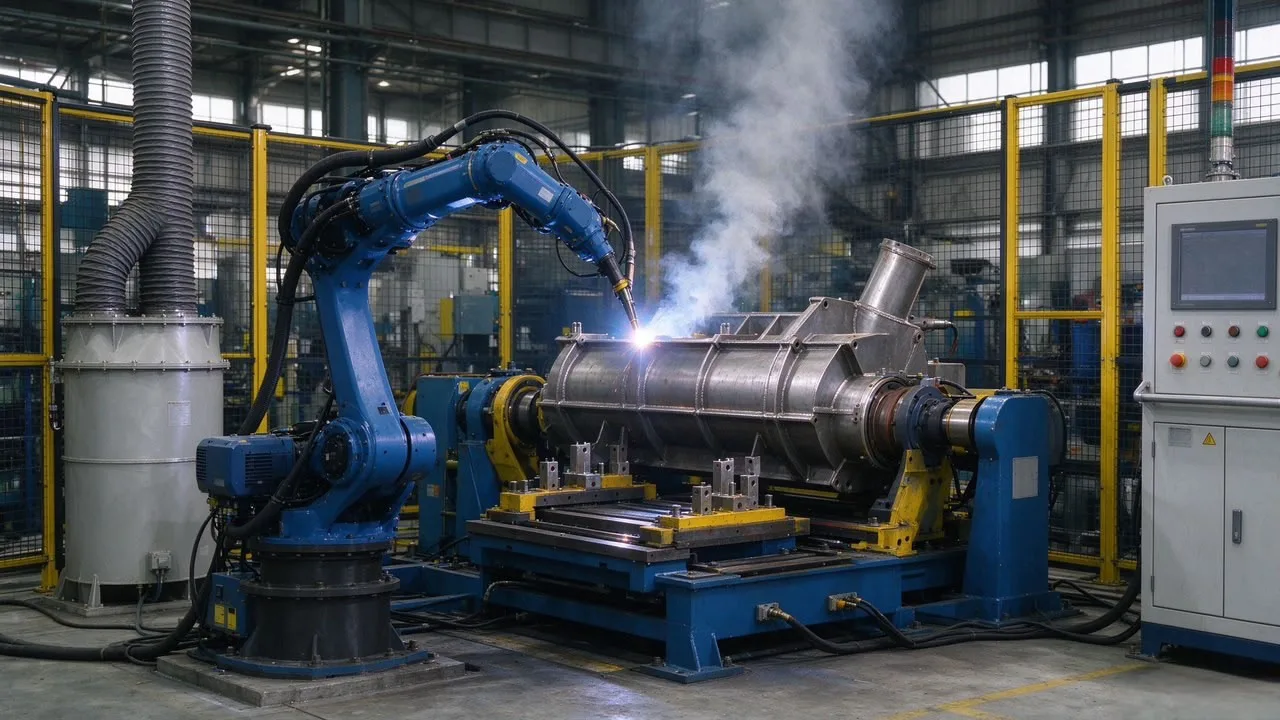
How to pair a cobot with a CNC machine: automation-ready features, the 5-8% vs 20% retrofit cost gap, cobot sizing plus safety basics.
A collaborative robot loading a CNC machine is the most common first automation project in a small shop, and for good reason. The parts are repetitive, the movements are simple, and the robot pays for itself in unattended hours. But pairing a cobot with a machine is only smooth if you prepare the machine side properly. Here is the practical view.
Why Machine Tending Comes First
Machine tending is low-risk automation: pick a part from a tray, open the door, load it into a fixture or chuck, close, start, reverse at cycle end. There is no complex vision or path planning, and cycle time gains come from keeping the spindle cutting through breaks and shift changes rather than from robot speed.
The trend confirms it. Roughly 35 percent of machine buyers now ask for automation-ready features, up from about 10 percent two years ago. Buyers have learned what late adopters discovered the hard way.
The Cost Lesson: Factory-Fitted Wins
Here is the number that matters. Retrofitting automation onto an existing machine commonly costs over 20 percent of the machine price, while specifying automation readiness at the factory costs 5 to 8 percent. The difference is engineering: door interlock integration, I/O handshaking, mounting provisions and layout are trivial during assembly and awkward after.
What Automation-Ready Means at Purchase
When you compare machines, ask specifically for:
- Open I/O and control interface so the robot can handshake start, door and cycle signals with the control
- Door integration that the robot or a PLC can operate safely
- A chip conveyor for unattended runs, since chips that are not cleared will stop a lights-out cell fast; we offer an automatic chip conveyor as an option
- Mounting and floor space planned for the robot pedestal and part trays inside the footprint
- Probing or part presence detection so the cell can confirm a part is seated before cycling
Choosing the Cobot
Match the cobot to the part, not the catalogue. Typical cobots carry payloads from a few kilograms up to around 16 kg; a steel mould insert is different business from an aluminium connector block. Check that reach covers from tray to spindle with margin, and be realistic about cycle time: the cobot adds handling seconds, and the win comes from running nights and weekends, not from beating a human operator by two seconds per load.
Do Not Skip the Risk Assessment
Collaborative does not mean no safety work. Speed and separation monitoring, force limits, scan zones around the cell and a documented risk assessment are part of the project. A cobot swinging a 5 kg steel part is a hazard regardless of its collaborative certification, so involve your safety officer early.
Part Presentation Decides Everything
In real cells, the robot is rarely the bottleneck; the trays are. Blanks dumped in a bin defeat a cobot, while nested or escapement-fed parts keep the gripper and program simple for years. Before quoting the cell, decide how parts arrive and leave: standard trays, a simple gravity feed, or pallets of raw stock. A modest investment in part presentation saves more than any upgrade to a faster robot, and it makes the first cell predictable enough to plan the second one.
A Practical Pairing Checklist
- Pick a repetitive part family with consistent blanks as your first cell.
- Buy the machine automation-ready; pay the 5 to 8 percent, not the retrofit 20.
- Standardise fixtures and trays so the robot gripper stays simple.
- Start with one shift of assisted running before attempting lights-out.
- Log cycle and alarm data from day one to find the real bottlenecks.
If you are planning a tending cell, tell us the part and the target hours of unattended running. We will configure the machine with the interfaces, chip conveyor and options the cell needs from day one.
Talk to VITOP Machinery
Planning a machine purchase or need help matching a model to your parts? Send your drawings or questions to vitopmachinery@163.com, or message us directly on WhatsApp: +86 183 1908 0212. You can also browse all machines at www.vitopmachinery.com. We reply within one business day.
Need a CNC Machine for Your Project?
Tell us what you need to machine — our engineers will recommend the right model and send a quotation within 24 hours.