Connector Moulds Are Booming: Machine Requirements Explained
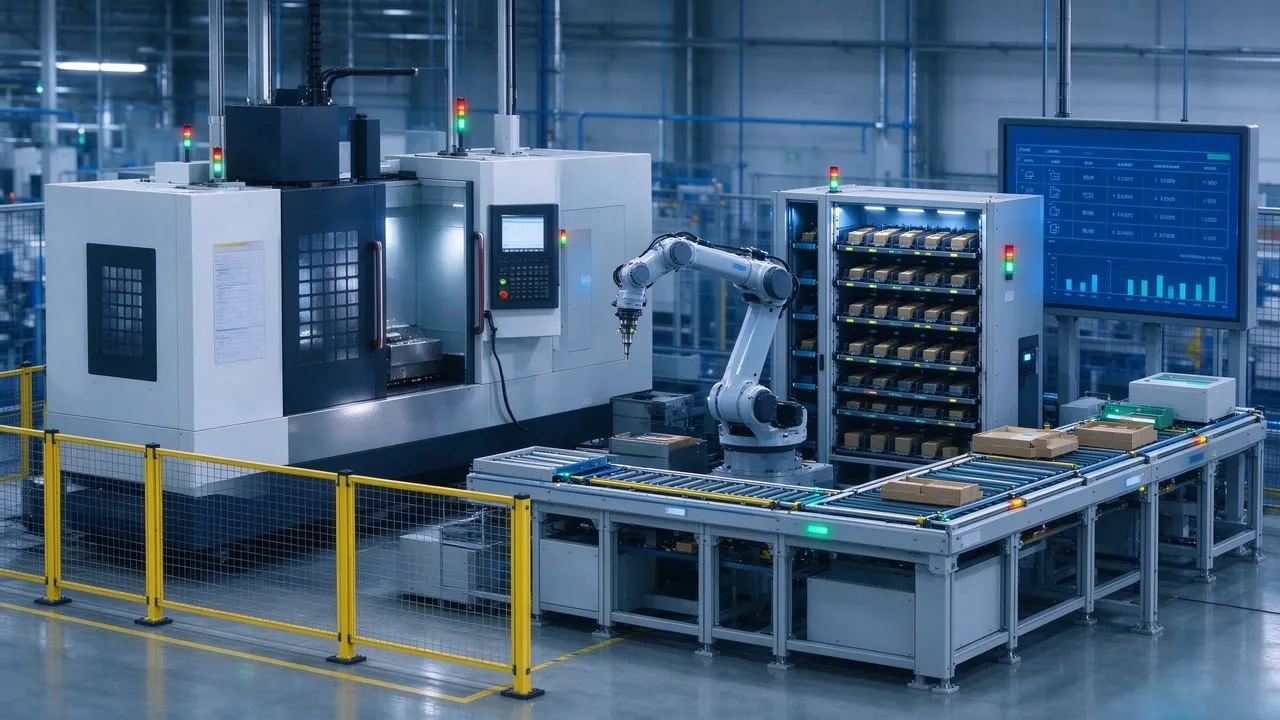
Connector mould orders grew about 33% in 2025-2026 as electronics production scales up. Here are the machine requirements for cutting these small, demanding moulds.
Orders for connector moulds grew about 33% between 2025 and 2026, and electronics and 3C products now account for roughly 18.9% of Southeast Asia's machine demand. Vietnam's electronics corridor around Bac Ninh and Thai Nguyen keeps scaling, and every new connector design needs a mould. If you cut moulds, this is a market worth preparing for, but connector moulds are among the most demanding work a mould shop can take on.
Why connector moulds are so demanding
A connector mould packs tiny cores, deep ribs and narrow slots into a small footprint, usually in hardened steel. Tolerances on the steel are tighter than the molded part tolerance, because shrinkage and wear eat into your margin. One core that is 0.01 mm off can produce a connector that will not mate. The work also involves long unattended cutting cycles, so machine reliability and thermal stability directly affect your delivery dates.
Milling requirements
High spindle speed, small taper
Connector mould features are small, which means small tools and high spindle speeds. Machines with 12,000 to 24,000 rpm spindles are the norm for this class of work, especially when machining aluminum electrodes or finishing steel surfaces. The spindle taper follows the same logic: BT30 for light, fast cutting and BT40 as the standard production choice. BT50 is overkill for most connector mould details.
Accuracy grade and stability
Standard VMC positioning accuracy of plus or minus 0.01 to 0.02 mm is not enough for fine connector details; look for precision-grade machines at around 0.005 mm. Ask any supplier for the actual machine's geometric test report based on the ISO 10791 series, not a catalogue figure. Thermal stability starts with the machine's structure. At VITOP, mould machines are built on HT300 resin-sand castings with double ageing treatment and hand-scraped, matched guideways, which is the kind of foundation detail that decides whether accuracy holds through a long shift.
Where EDM comes in
Even the best milling setup cannot reach everywhere in a connector mould. Deep, narrow ribs and sharp internal corners still belong to EDM. Wire EDM handles profile cuts and taper work; sinker EDM forms the deep rib geometry that end mills cannot access. If connector moulds are your growth plan, budget for EDM capacity alongside your milling machines. VITOP supplies EDM machines alongside its machining centers, and engraving-milling machines for finishing hardened tooling surfaces, so the process chain can come from one supplier.
A realistic equipment list
- A precision-grade VMC with a high-speed spindle, 12,000 rpm or more, BT30 or BT40
- EDM machines for ribs and inaccessible corners
- A grinder or engraving-milling machine for hardened steel finishing
- Quality toolholding and small-diameter tool inventory, which buyers often underestimate
Plan for the long cutting cycle
Connector mould details are small, but the machining hours are not. A single cavity block can run many hours of finishing, often overnight. That reality puts a premium on reliability features that brochures rarely headline: chip evacuation around small tools (a clogged pocket snaps a 1 mm end mill instantly), through-spindle or directed coolant for deep pockets, and tool length management so a mid-cycle tool change does not ruin the surface. Ask the supplier how their machines handle long unattended finishing cuts, and ask for the chip conveyor option if your cycle times run past a shift. VITOP offers automatic chip conveyors across its range, and a machine that clears its own chips is a machine that finishes its own cycles.
Get the machine, then get the work
Connector mould demand is growing at about a third per year in the region, driven by electronics and EV wiring that keep multiplying connection points. Shops with high-speed milling, EDM capability and documented accuracy will take that work. Send a typical connector mould drawing to your shortlisted machine builders and ask them to propose a machine configuration. The quality of that technical answer tells you more than any price list.
Talk to VITOP Machinery
Planning a machine purchase or need help matching a model to your parts? Send your drawings or questions to vitopmachinery@163.com, or message us directly on WhatsApp: +86 183 1908 0212. You can also browse all machines at www.vitopmachinery.com. We reply within one business day.
Need a CNC Machine for Your Project?
Tell us what you need to machine — our engineers will recommend the right model and send a quotation within 24 hours.