Custom CNC Machines for EV Battery Trays, Motor Housings
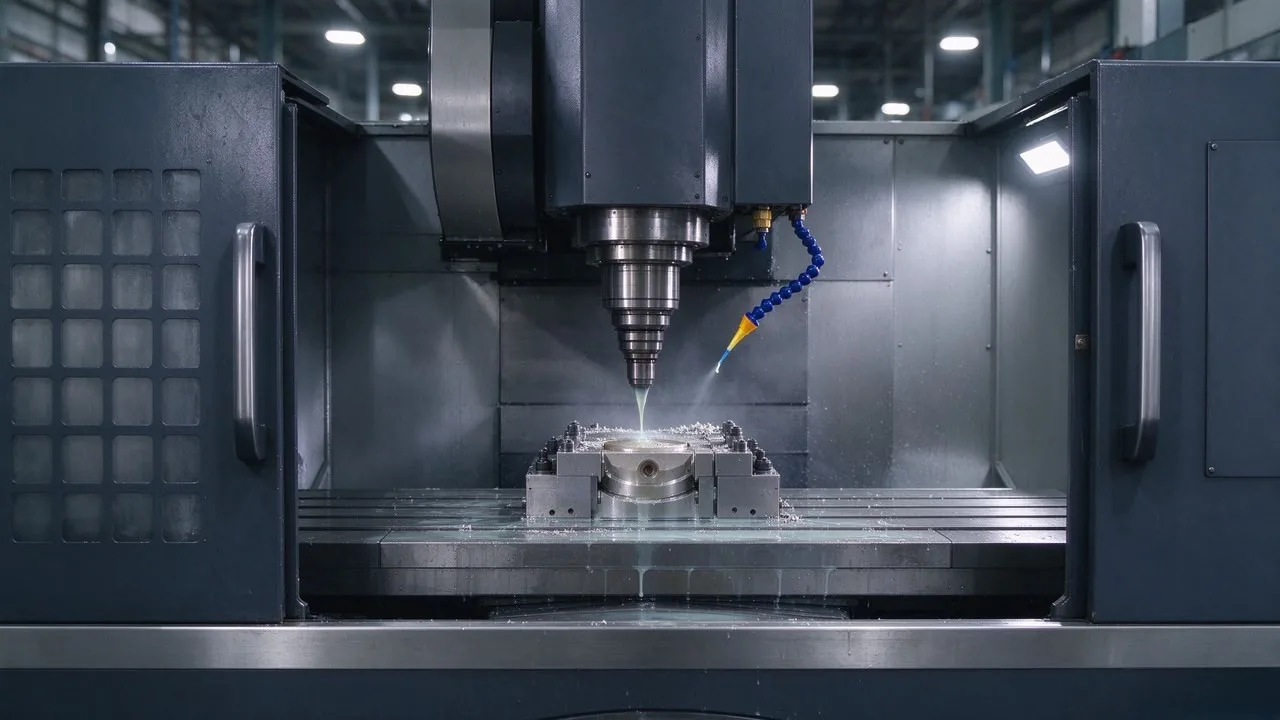
EV parts machining has its own rules. How battery trays and motor housings reshape machine choice, plus which custom options matter most.
EV part orders are reshaping machining demand in Southeast Asia. Industry reports show orders for battery tray machining grew around 41% and connector moulds around 33% between 2025 and 2026, while Thailand's Board of Investment has stopped backing general metal cutting projects and now pushes smart manufacturing and high-precision CNC. If you plan to chase this work, a standard catalogue machine will not be enough. You will want a custom configuration built around the part.
Why Battery Trays Stress a Machine Tool
A typical EV battery tray starts as a large aluminium plate, often 1,200 to 1,800 mm long. You machine pockets, ribs and sealing surfaces out of it, removing most of the material, and the finished walls may be only 2-3 mm thick. Three consequences follow. First, the machine needs a big envelope; a practical rule is your largest workpiece plus 20-30% clearance in every axis. Second, chip volume is enormous, so coolant flow and chip evacuation decide whether the machine runs or chokes. Third, thin-wall distortion is the enemy, which puts a premium on rigidity and stable clamping rather than raw spindle speed.
Machine Types That Fit Tray Work
For trays up to roughly 1.5 m, a large-format vertical machining center with a BT50 spindle handles the heavy roughing. Beyond that, a gantry machining center is the better tool: the worktable sits low, the gantry spans the plate, and table load ratings from a few tonnes up to tens of tonnes cover even structural battery packs. Moving-column designs suit long plates where you machine in passes. If you also face the part after welding or bonding, flatness across the whole tray becomes the key number to negotiate.
Motor Housings and Drive Components
Motor housings are a different problem: concentricity between bores, cooling jacket sealing surfaces and mounting faces. Horizontal machining centers shine here because the part can be machined on multiple faces in one setup, and a CNC lathe covers the turning operations. For housings with angled cooling ports or side features, right-angle heads avoid a second operation on another machine.
Custom Options Worth Specifying
- Through-spindle coolant and high-pressure pumps for deep pocket clearing.
- Oversized coolant tanks and an automatic chip conveyor; aluminium chips from high-speed cutting are stringy and clog standard trays fast.
- A fourth axis or right-angle head to consolidate operations.
- Probing for part setup and in-process offsets on large, flexible plates.
- Automation-ready interfaces, factory-fitted while the machine is being built.
Do not forget the workholding. Thin trays warp when clamped hard, so vacuum chucks, low-profile clamps or dedicated fixtures belong in the specification, not in a later panic. State the fixture weight in the RFQ so the builder sizes table load and acceleration correctly.
Controls and Program Flow
EV part programs are long and heavily CAM-generated, so specify generous program memory, high-speed look-ahead and a control brand your programmers already run. Fanuc remains the most common control in Southeast Asia, fitted to roughly half of new machines, with Siemens strong in Malaysia and Indonesia. A machine that cuts well but refuses to talk to your CAM post-processor costs weeks before the first good part.
Timing and Cost Planning
Lead times for custom machines commonly run 60-120 days, so order against your ramp-up plan, not against the day a sample part arrives. Automation fitted at the factory typically adds 5-8% to machine cost, while retrofitting later often costs 20% or more, so decide early. When you request a quotation, send the tray or housing drawing with tolerance callouts, expected monthly volume and your preferred control; a builder who casts, machines and assembles in-house can quote a realistic configuration instead of a generic model number.
Talk to VITOP Machinery
Planning a machine purchase or need help matching a model to your parts? Send your drawings or questions to vitopmachinery@163.com, or message us directly on WhatsApp: +86 183 1908 0212. You can also browse all machines at www.vitopmachinery.com. We reply within one business day.
Need a CNC Machine for Your Project?
Tell us what you need to machine — our engineers will recommend the right model and send a quotation within 24 hours.