Custom Voltage Setups for Export CNC Machines: 380V, 415V, 60Hz
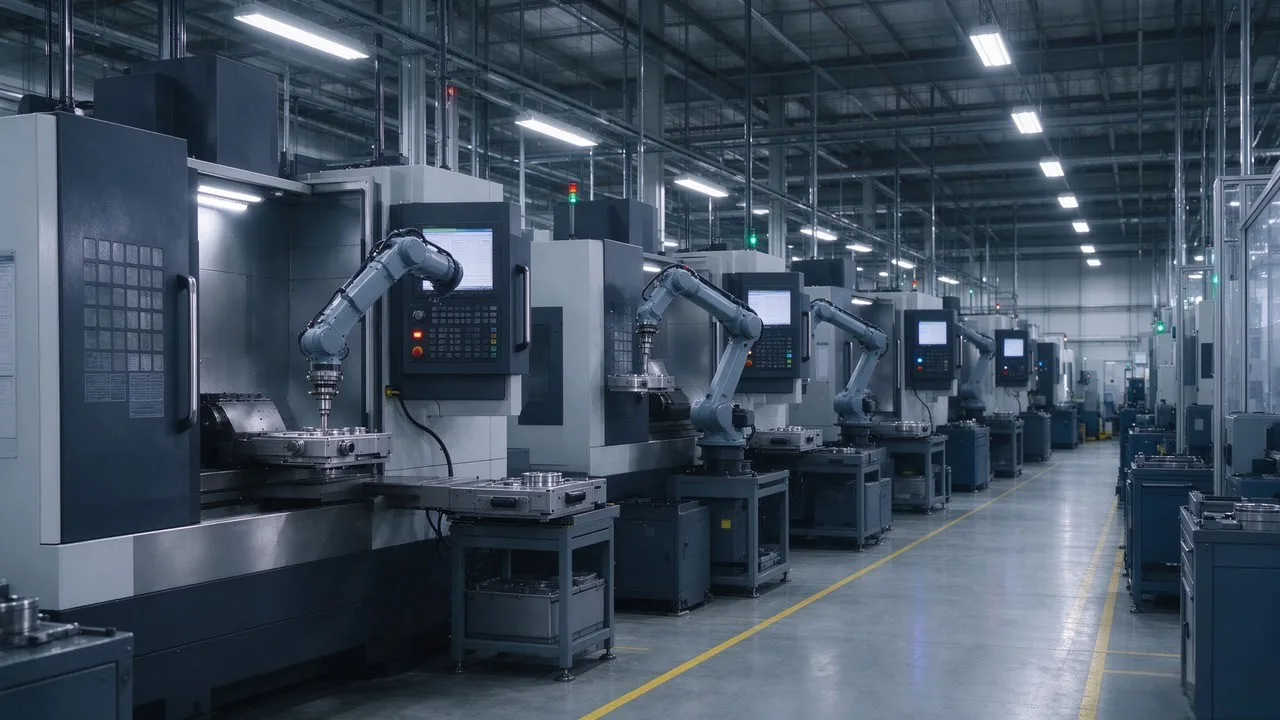
Thailand runs 380V/50Hz like China, other markets differ. Specify voltage and frequency at order stage, not on arrival.
Power is the detail buyers remember too late. A machine configured for the wrong voltage runs poorly or not at all, and rewiring a CNC machine after import is slow and expensive. Specify voltage and frequency at order stage, and the machine arrives ready for your wall socket.
Why factory configuration matters
A CNC machine is not a plug adapter problem. Spindle motors, servo drives, the control system and the coolant and hydraulic pumps are all selected and wired for a specific supply. Changing frequency after the fact means replacing or reconfiguring drives, and it can void the warranty. A factory build to your grid, by contrast, is tested under power before shipment.
Common export configurations
- 380V / 50Hz, 3-phase: the Chinese domestic standard and also the standard in Thailand and Vietnam. Thai buyers are lucky here: Thailand's industrial power is 380V/50Hz, identical to China, so machines ship as built with no electrical changes.
- 415V / 50Hz, 3-phase: common in Malaysia, Singapore and other Commonwealth-influenced grids. Chinese machine electrical cabinets handle this comfortably; confirm it is written on the order.
- 220V / 60Hz, 3-phase: found in the Philippines and parts of the Americas. This is the configuration most worth specifying carefully, because the 60Hz supply changes motor speeds and cooling behavior if not designed in.
- 230V single phase: Indonesia's standard single-phase supply. Three-phase industrial power is available, but the builder must know what your site actually has, down to plug standards, which Indonesia also regulates.
What to tell the factory
- Your supply voltage and frequency as measured at the installation site, not what the utility's brochure says. Voltage sag under load is common in industrial estates.
- Total connected load available. Our VMC models, for example, list total electrical capacity around 25 KVA, while larger machines draw more; your electrical panel must supply it with headroom.
- Plug and connector standards for your country, if the machine ships with a supply cable.
Generator-fed shops
If your factory runs partially on generator power during outages, tell the builder. Generators introduce frequency drift and harmonic noise that sensitive drives notice. A brief note in the order lets the electrical engineer check the drives' tolerance range or recommend a stabilizer, both trivial at design stage and awkward after delivery.
Voltage fluctuation and stabilizers
In several tropical markets, grid stability is a bigger issue than the nominal voltage. Sags and surges shorten drive and spindle life, and they cause alarms that look like machine faults. Where fluctuation is known, we recommend a stabilizer or servo voltage corrector sized to the machine's load. It costs a fraction of a spindle rebuild and removes a whole category of service calls.
Testing before shipment
Whatever configuration you order, the machine should be power-tested at the factory. Ask for a photo or video of the machine running under power, with the electrical cabinet label visible, showing the voltage and frequency you specified. It is a five-minute request that prevents the classic failure: a machine built for one grid, inspected on another, and commissioned on a third.
One last point: mention voltage in your RFQ, not after the proforma invoice. Changing the electrical design mid-order is possible in some cases but can add days or weeks. Builders who handle exports daily, including OEM builds, keep standard wiring variants for the major markets; the earlier they know, the more routine your order stays.
Common questions we hear
Buyers often ask whether a 50Hz machine can run on 60Hz supply or the reverse. With most modern variable-frequency spindle drives the spindle itself adapts, but pumps, fans and coolant systems often do not, and control transformers are fixed. Treating frequency as a factory configuration avoids the half-working result. The second common question is about cost: a non-standard voltage variant usually adds little or nothing to the price when specified at order stage, because the wiring change is made during assembly anyway. It only becomes expensive when it surfaces after the machine is built.
Talk to VITOP Machinery
Planning a machine purchase or need help matching a model to your parts? Send your drawings or questions to vitopmachinery@163.com, or message us directly on WhatsApp: +86 183 1908 0212. You can also browse all machines at www.vitopmachinery.com. We reply within one business day.
Need a CNC Machine for Your Project?
Tell us what you need to machine — our engineers will recommend the right model and send a quotation within 24 hours.