From Casting to Test Cut: How a Mould Machine Is Made
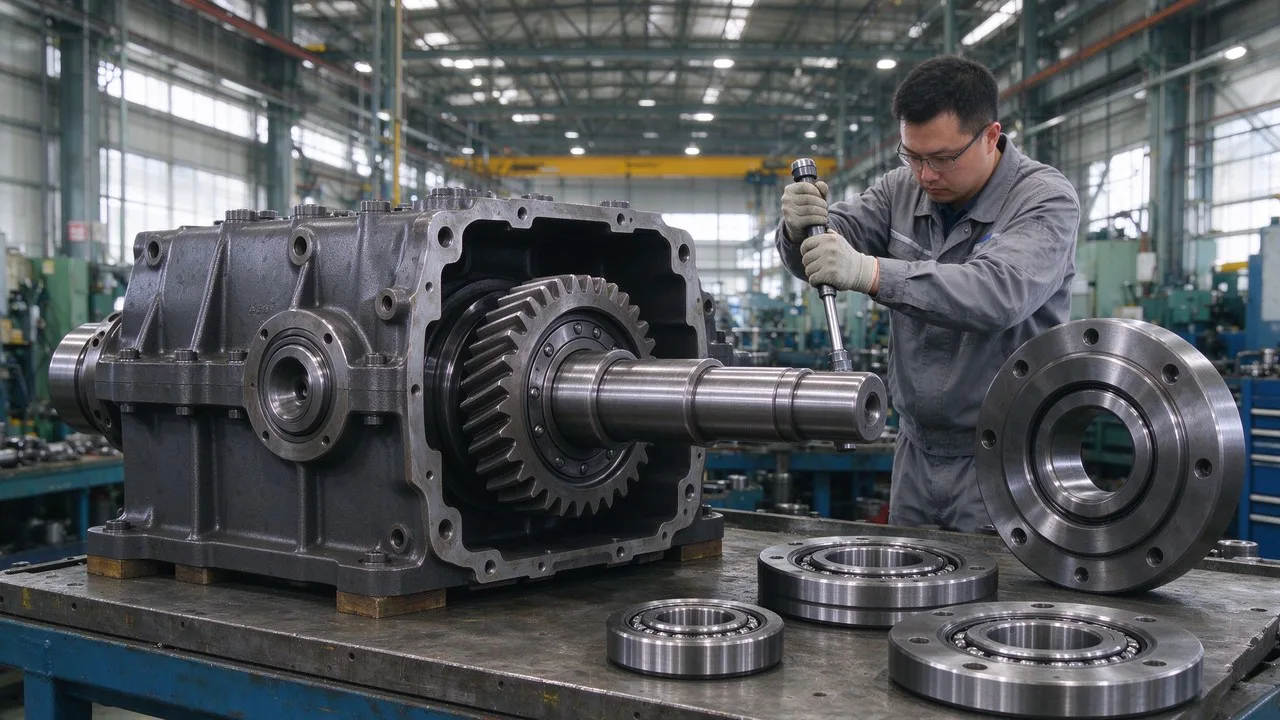
A mould machine passes through casting, ageing, machining, scraping, assembly plus laser verification. The build steps that decide how it cuts.
Two machines with the same specification table can cut very differently, and most of the difference was decided long before the machine was assembled. If you are buying mould equipment, it helps to know the build steps and where quality is actually won or lost.
Casting and ageing
The base, column and saddle start as HT300 resin-sand castings. Resin sand holds the shape of large, complex castings with fewer defects, and HT300 carries the compressive loads a die machine sees. The castings are then aged - twice. Each cycle relieves internal stress, and the second cycle is what keeps the geometry from slowly drifting after the machine reaches your floor.
Precision machining of the structure
Guideway faces, spindle housing bores and mating surfaces are machined on large equipment in sequence. Dimensional work here is slow by design: a saddle face machined in one aggressive pass today will move tomorrow. Shops that rush this stage produce machines that look right on delivery day and lose accuracy in month six.
Scraping and matching guideways
Where box ways are used, sliding surfaces are scraped and matched by hand so contact is distributed, not spotted. This is a craft step that no automation has replaced. It is also why guideway construction is a real cost difference between machines rather than a marketing line.
Assembly: spindle, drive, electrics
Spindles, ballscrews, guideways, lubrication, hydraulics and the electrical cabinet go in under documented checks. Torque values, preloads and alignments are recorded against the machine's serial number. When you call about the machine in year three, those records are what let an engineer answer precisely.
Laser verification and test cut
Positioning is measured with laser interferometry and circularity with ballbar testing on every machine before shipment. Where agreed, a test cut runs under the loads the customer described at order time. Only then does the machine go to packing.
Why the sequence matters to you
Each of these steps is a place where quality is built in or lost, and the loss always shows up later as hand work in your shop. A casting that was not aged twice moves. A guideway that was not matched wears unevenly. A machine that was never measured cannot be trusted. When you compare quotes, ask for the evidence of each step rather than the promise of the result, because the cheapest machine is rarely the one that costs the least to own.
Talk to VITOP Machinery
Ask for the build and test records for the model you are considering: vitopmachinery@163.com or WhatsApp +86 183 1908 0212. Machines at www.vitopmachinery.com.
Need a CNC Machine for Your Project?
Tell us what you need to machine — our engineers will recommend the right model and send a quotation within 24 hours.