Stamped Panels or Injection Trim: Tooling Differences
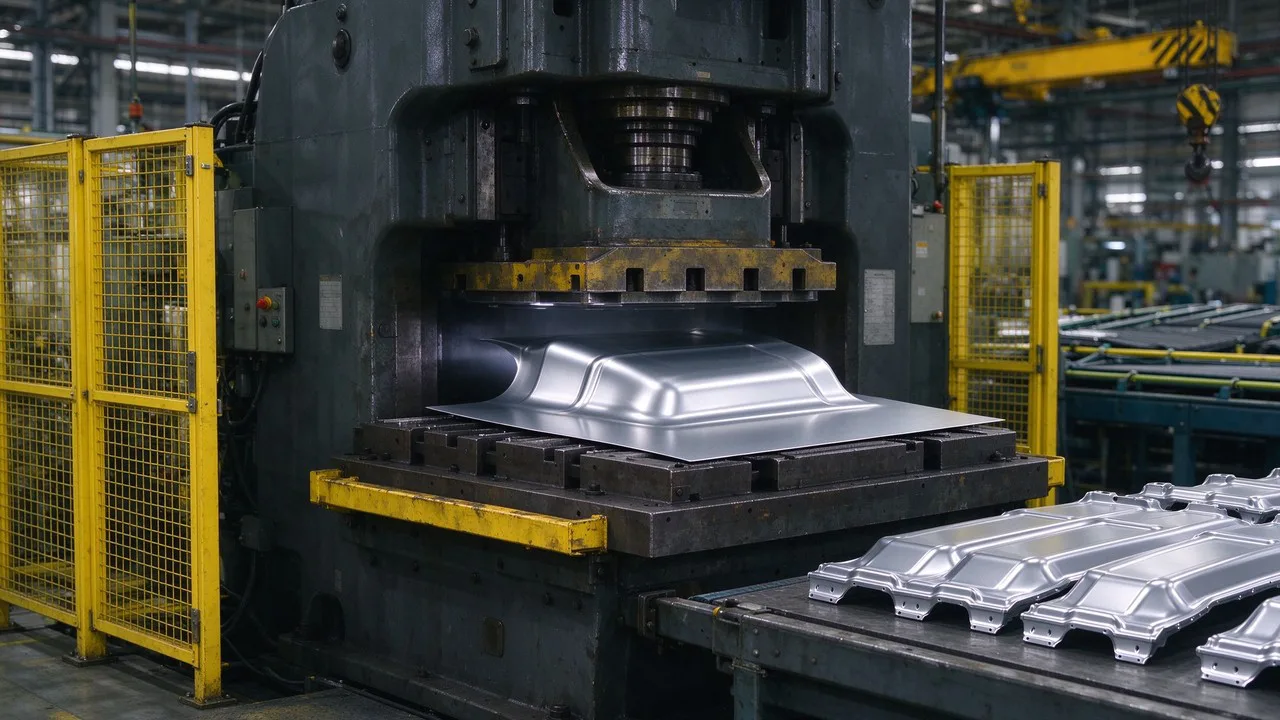
Stamped steel door dies and injection moulds for trim parts ask for different machines. A practical comparison for mixed automotive tooling shops.
Cars use both stamped metal panels and injection moulded trim, and the tooling behind them is made very differently. A shop that takes both kinds of work needs to know where the equipment requirements overlap and where they diverge, because the same machine is rarely ideal for both.
Steel and hardness
Stamping dies for outer panels are cut from large cast or forged blocks in tough, often hardened steel, in sizes that demand long travels and high torque. Injection moulds for interior trim - pillar covers, grilles, speaker housings - are usually cut from P20, 718H or similar grades, with finer detail work and tighter cosmetic requirements. The first is a power and rigidity problem; the second is a surface and detail problem.
Size class and machine envelope
Door and bonnet dies push you into large machining centers. Interior trim moulds sit comfortably on mid-size vertical machining centers, where high spindle speeds and small finishing tools matter more than raw torque. If your trim work dominates, buying one enormous machine for the occasional large die is usually a poor use of capital.
Detail, electrodes and EDM
Injection moulds carry ribs, textures, clips and slots that milling cannot fully reach, so EDM and electrode making are part of the workflow. Stamping dies carry fewer internal sharp corners but far more heavy roughing. Shops that do both typically pair a VMC with a grinder and a spark machine, and call on a gantry (or a subcontractor) for the rare large die.
What inspection needs to prove
For injection tooling, most disputes are about fit and finish: shut-off faces, parting lines, clip dimensions. For stamping dies, the proof is in the tryout and the panel. Either way, a machine with recorded laser and ballbar results gives you a known starting point, which shortens arguments and rework.
Planning a mixed tooling shop
In practice most tooling shops are mixed: they take occasional large die work to win the account and live on smaller trim tooling all year. The equipment answer is usually a capable mid-size VMC plus a trusted partner for the rare large die, rather than a large machine that idles. Count your hours by size class before committing capital - utilisation, not capability, decides what a machine really costs per year.
Talk to VITOP Machinery
We build machines for both worlds - large gantry mills for panel dies and fast VMCs for trim tooling, plus lathes, EDM and grinders. Tell us your tooling mix at vitopmachinery@163.com or WhatsApp +86 183 1908 0212. Range at www.vitopmachinery.com.
Need a CNC Machine for Your Project?
Tell us what you need to machine — our engineers will recommend the right model and send a quotation within 24 hours.