One Setup, Multiple Processes: Less Error, Faster Cycle Time
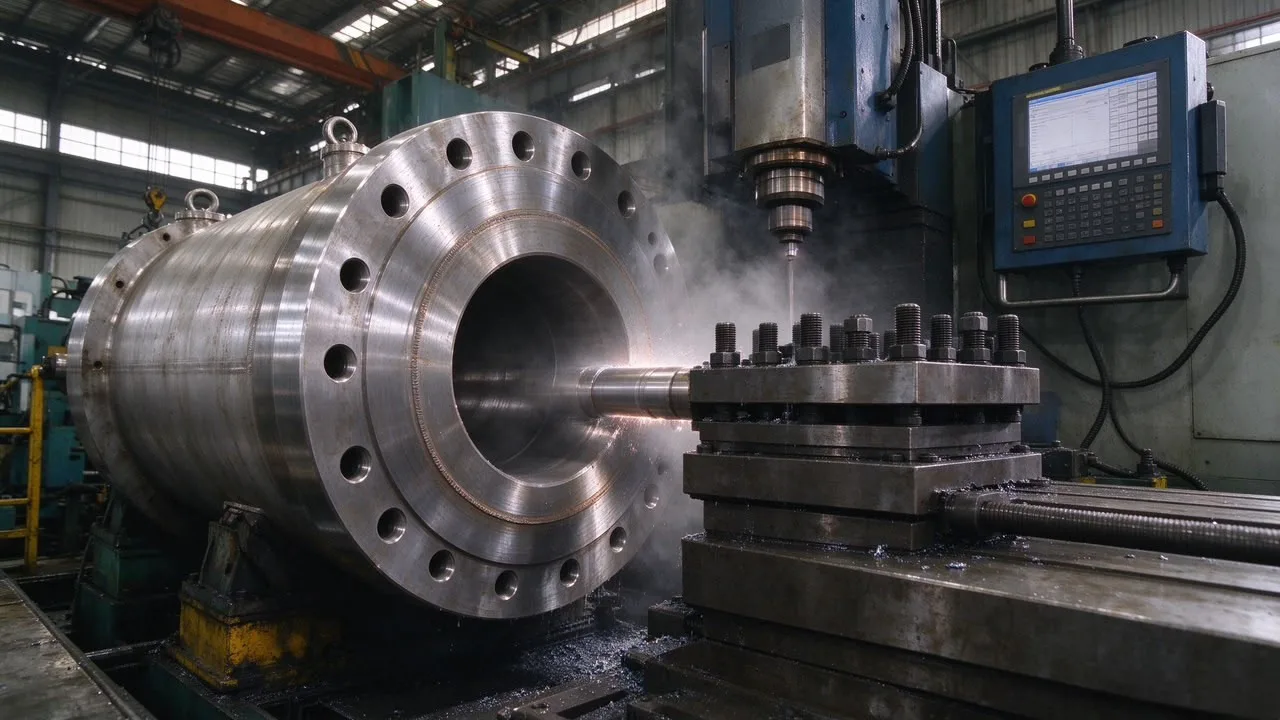
Combining milling, drilling plus tapping in one setup cuts re-clamping errors and lead time. Which machines consolidate operations best.
Every time a workpiece leaves one machine and enters another, accuracy and time both leak away. Re-clamping introduces new datums, and the part travels, waits and gets clocked in and out of queues. Cutting operations together into one setup attacks both problems at once, and it is one of the quiet reasons some shops quote tighter tolerances at lower prices.
Where setup errors come from
A tolerance on the print usually spans features made by different operations: a bore machined on the VMC relative to a face turned on the lathe, or holes drilled on one side of a housing relative to features cut on the other. Each re-clamping rebuilds the coordinate system, and small errors stack. Dial indicators, vise jaws and fixture wear each add a few hundredths of a millimetre, and by the third setup the stack can eat your tolerance budget entirely.
One setup removes the stack. When every feature is cut in a single clamping, all of them share the same datums, and the relationship between features depends on the machine's geometry rather than on the operator's clocking skill.
The cycle time side of the same coin
Setup reduction is also schedule reduction. The cutting itself is often minutes; the waiting between machines is hours or days. Fewer operations mean fewer queue points, fewer first-article checks and fewer opportunities for handling damage. In a busy job shop, consolidating two operations into one machine frequently halves the lead time of the part even when cutting time barely changes.
Machines that consolidate processes
- Vertical machining centers mill, drill, bore and tap in one setup, which is why they dominate general prismatic work. High-speed spindle versions handle mould and 3C parts where fine finishing matters.
- Drilling and tapping centers take the light hole work that would otherwise queue behind heavy milling.
- 5-axis machining centers reach multiple faces of complex parts, impellers and aerospace surfaces, in one clamping. The machine costs more, but it replaces fixtures, not just operations.
- Right-angle heads, fitted to gantry machines, cut side faces and internal features of large workpieces that would otherwise need a second setup on a horizontal machine.
Two examples that make the trade-off concrete
For example, an aluminium housing needs facing, a bores, drilled and tapped holes on four sides, and a reaming operation. On separate machines that is three setups, three datums and two transport loops. On a 5-axis machining center it is one clamping with the head reaching four faces, and the bore-to-hole relationships come from the machine geometry rather than the operator's clocking. By contrast, a long shaft with purely turned features gains nothing from 5-axis work; a good lathe in one setup is already the consolidation. The skill is reading the part print honestly: consolidation pays where features interact across faces, and adds cost where they do not.
How to plan for it
Start from the process plan, not the machine list. Take your three highest-volume parts and ask, operation by operation, which steps can share a clamping. Then check whether a fixture can hold the part so every feature is reachable. Budget honestly for the tooling that consolidation requires, since tooling, installation and training typically add 20-40% on top of the machine price.
Multi-setup still wins sometimes: very large parts, or operations with incompatible coolants, are legitimate reasons to split. But for the typical bracket, housing or mould plate, every setup you eliminate returns accuracy and schedule time at once. At VITOP we build the machine range, VMC to 5-axis to gantry with angle heads, to make those one-setup routes possible. Send us the part drawings and we will tell you honestly where one setup fits and where it does not.
Talk to VITOP Machinery
Planning a machine purchase or need help matching a model to your parts? Send your drawings or questions to vitopmachinery@163.com, or message us directly on WhatsApp: +86 183 1908 0212. You can also browse all machines at www.vitopmachinery.com. We reply within one business day.
Need a CNC Machine for Your Project?
Tell us what you need to machine — our engineers will recommend the right model and send a quotation within 24 hours.