Robot and CNC Cells Are Merging into Closed-Loop Production
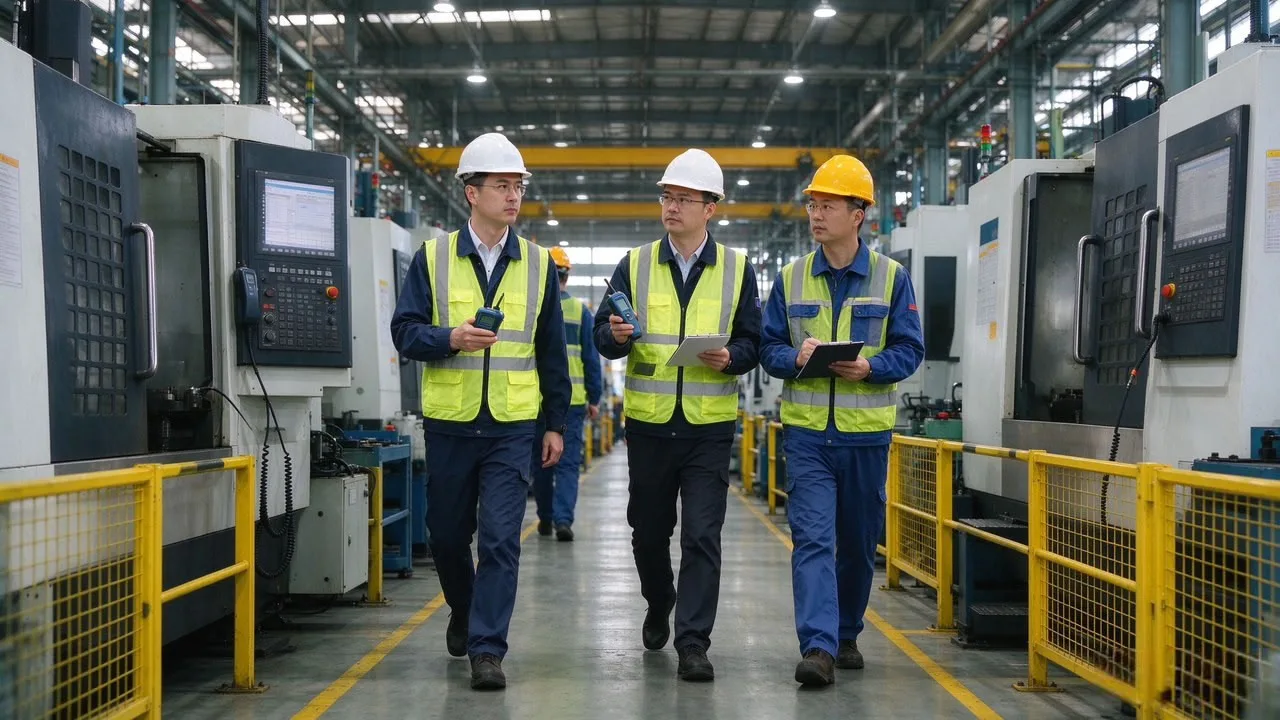
35% of buyers now ask for automation-ready CNC features, up from 10% two years ago. How robots, chip control plus data close the loop.
Around the region, machining cells are quietly changing shape. The machine still cuts metal, but around it sits a robot that loads and unloads parts, a conveyor that clears chips, and a data link that reports every cycle. The cell is closing its own loop, and the market numbers show buyers have noticed.
The demand has already moved
Roughly 35% of buyers now ask for automation-ready features on new machines, up from about 10% two years ago. The economics explain the shift. Retrofitting automation onto an existing machine commonly costs 20% or more of the machine price, while specifying it at the factory adds roughly 5-8%. Buying automation-ready is not a premium any more; it is the cheaper route to the same destination.
What a closed-loop cell actually is
Closed loop means information and material both circulate without a human carrying them. Material flows in through the robot or gantry loader and out to a finished-parts tray. Chips flow out through an automatic chip conveyor instead of a shovel. Data flows out through the control's interface: cycle counts, alarms, spindle load. Each loop removes a small human task, and together they let one operator mind three or four machines instead of one.
The building blocks worth specifying
- Machine tending robot or cobot. A collaborative robot with simple grippers suits shops running families of small parts; a dedicated loader suits high-volume single parts.
- Chip management. An automatic chip conveyor is the least glamorous option on the list and the first one automation engineers ask about. Swarf on the ways or in the coolant kills unattended running.
- Data interface. The control must expose cycle status and alarms to external systems. About 46% of buyers now rank interface openness in their top three criteria, for exactly this reason.
- Repeatable workholding. Robots forgive nothing. If the part is not located identically every cycle, the cell stops.
Where the payback shows up
Automation rarely makes one part dramatically faster; it makes the day dramatically longer. A tended machine runs 8 productive hours; a simple cell runs through breaks, meetings and shift changes, and the extra hours are nearly pure margin because nobody is paid overtime to stand there. Add the quality benefit, since a robot places the part identically every cycle, and the cell pays for itself through utilisation rather than cutting speed. The shops that see this quickest are usually the ones already drowning in orders, not the ones chasing volume. If your machine is idle waiting for a person, the robot is the cheap part.
Three pitfalls that stop cells early
Part families that are too varied, so the gripper and program change hourly. Fixtures that locate from a worn surface, so the robot loads a part a fraction of a degree off. And safety fencing bought as an afterthought, so the cell sits idle waiting for a compliance sign-off. None of these is a robot problem; all three are planning problems that cost nothing to fix on paper.
Starting without overbuilding
You do not need a lights-out factory on day one. A common path is one VMC plus one cobot tending a single part family, running through break and into the evening shift. Once the fixturing and program prove stable, the same pattern extends to the next machine. At VITOP we offer automatic chip conveyors and right-angle heads as factory-fitted options and support OEM / ODM builds, so the cell can be specified as one order rather than assembled from three suppliers after delivery.
The shops winning lights-out hours started small but specified the interfaces early. Ask for automation readiness in the original quotation. It is the last cheap chance you will have.
Talk to VITOP Machinery
Planning a machine purchase or need help matching a model to your parts? Send your drawings or questions to vitopmachinery@163.com, or message us directly on WhatsApp: +86 183 1908 0212. You can also browse all machines at www.vitopmachinery.com. We reply within one business day.
Need a CNC Machine for Your Project?
Tell us what you need to machine — our engineers will recommend the right model and send a quotation within 24 hours.