Right-Angle Heads: Get Four-Side Machining from One Machine Setup
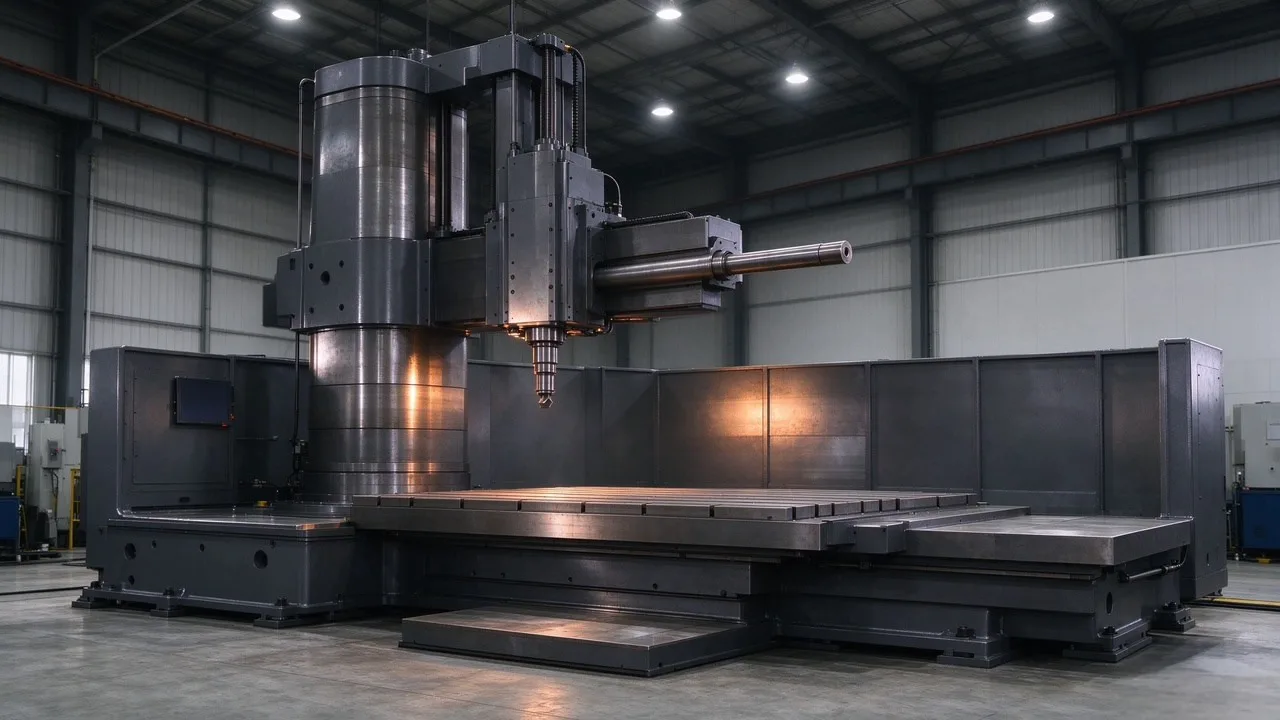
How a right angle head on a machining center lets you machine deep cavity walls and large workpieces in one setup, including BT50 gantry versions and custom builds.
Some parts simply cannot be machined the normal way. Deep cavity walls, the internals of a large mould, the four sides of a bulky weldment: reaching them with a vertical spindle means re-clamping the part again and again. A right angle head changes that. It turns the tool 90 degrees, so the cutter works sideways instead of down, and a five-side job becomes one setup on one machine.
What a Right Angle Head Does
A right angle head, sometimes called an angle head, mounts in the spindle and redirects the cutting tool through a 90-degree gearbox. The tool spins horizontally while the machine keeps full control of positioning. With the head indexed to different orientations, you can machine all four vertical faces of a workpiece without turning it over.
Where It Earns Its Keep
Deep cavity side machining
Think of a deep mould cavity, for example a bumper die or a deep drawn die. The floor is easy; the vertical walls near the bottom are the problem. A standard spindle and tool holder are too long and too fat to reach down without hitting the opposite wall or chattering. An angle head reaches in horizontally with a shorter, stiffer tool, so you get a better finish and no collision.
Large workpieces that are hard to re-clamp
A large base plate or machine bed may weigh more than your crane wants to flip. Each re-clamp costs hours and risks losing the datum. Machining the sides with an angle head in the same setup removes those flips entirely. Fewer setups also keep accumulated error low, because every feature references the same origin.
The BT50 Interface on Gantry Machines
On gantry machining centers, VITOP offers right-angle heads in BT50 versions. BT50 is a heavy taper with plenty of rigidity and torque capacity, which the head needs: a 90-degree gearbox consumes part of the spindle power, and side machining puts real bending load on the interface. The head clamps through the standard BT50 taper and is driven by the spindle, so switching between normal and angle-head work stays practical.
Two practical points. First, plan for some power and speed loss across the gearbox: the output spindle typically runs at a ratio of the main spindle, so choose cutters and feeds accordingly. Second, keep the tool overhang short. Side machining with a long tool defeats the purpose, because the stiffness you gained by approaching horizontally is lost at the tool tip.
A Typical Job, Step by Step
For example, a mould shop machining a deep cavity die would rough the cavity with the standard spindle first. Then the right angle head is indexed to machine the four vertical walls, side windows and slider seats in the same setup, and the critical wall surfaces are finished horizontally where the cutter pressure is supported by the wall itself. One clamping, one datum, no re-indication between faces.
Heavy-Duty, Extended and Custom Builds
One size does not fit every job. VITOP's angle head range includes heavy-duty versions for roughing, extended versions that reach deeper into cavities, and custom builds made for a specific part or reach. If you send us the drawing of a feature you cannot reach, we can work out the head length, output spindle size and orientation you actually need, and quote it as part of the machine package. Automatic chip conveyors and other options can be added to the same build.
Is It Worth the Option?
Price the alternative honestly: a second machine, extra fixtures, extra setups, and the scrap risk of re-clamping heavy parts. For shops doing mould work or large welded fabrications, the angle head option usually pays for itself within a modest number of jobs. When you inquire, describe the deepest reach and the heaviest side cut on your parts; those two numbers decide whether a heavy-duty or an extended head is the right choice. Ask us which configuration fits your work; we will size it from your drawings, not from a catalogue guess.
Talk to VITOP Machinery
Planning a machine purchase or need help matching a model to your parts? Send your drawings or questions to vitopmachinery@163.com, or message us directly on WhatsApp: +86 183 1908 0212. You can also browse all machines at www.vitopmachinery.com. We reply within one business day.