How Southeast Asian Shops Sequence Their First Machine Purchases
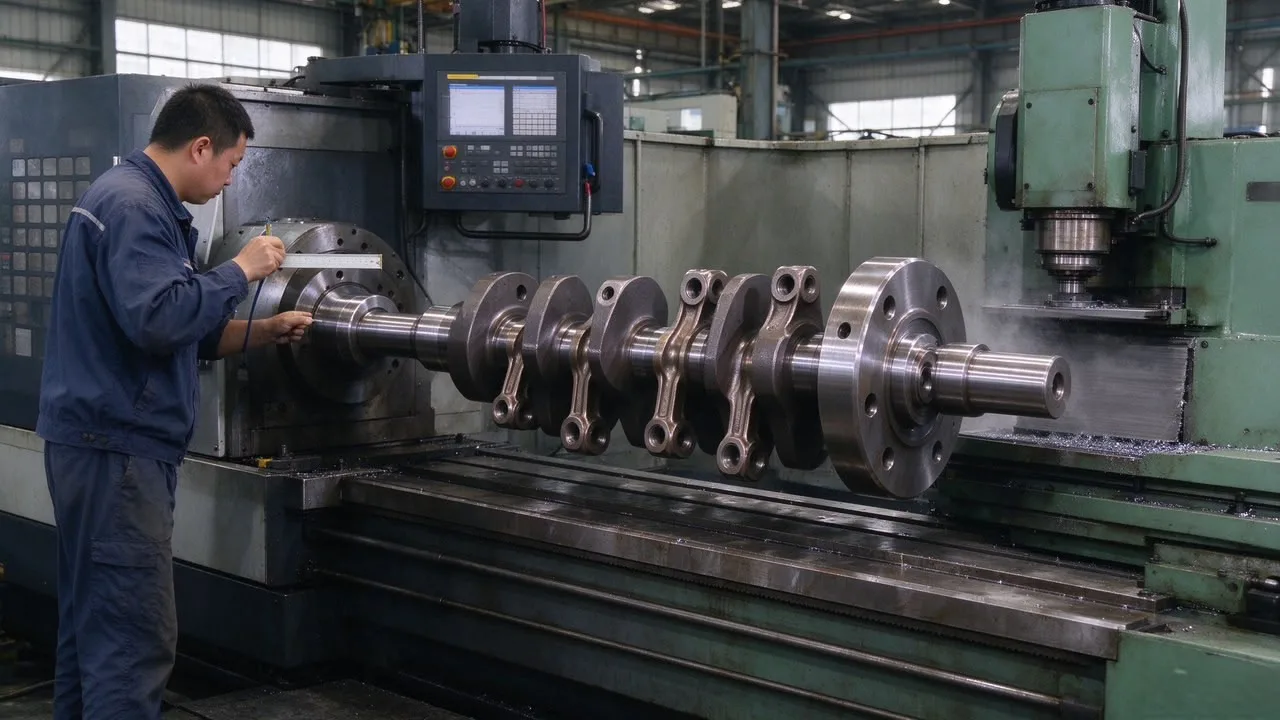
Exporters report a consistent first-machine sequence in Southeast Asia: flat bed lathe, then VMC, then bigger or faster machines.
Ask a CNC exporter where Southeast Asia sits in their order book and you will hear the same answer: it is the largest export region, often 40-45% of volume. Behind that number is a very consistent pattern in how shops build their machine parks. If you are planning your first or second machine, the sequence most of your neighbours follow is worth studying.
Step one: usually a flat bed lathe
Exporters report that Vietnamese shops commonly start with CK6140 or CK6150-class flat bed lathes. The logic is practical. A flat bed looks and works like the manual lathes the team already knows, the investment is modest, and it immediately covers the shafts, discs and bushes that nearly every job shop is asked for. Thai buyers, whose parts run larger, often begin with bigger units, and Indonesian job shops are currently moving from manual to CNC in volume.
Step two: a vertical machining center
The second machine is usually a VMC, and the market data explains why. Vertical machining centers account for about 67.1% of vertical CNC sales across Southeast Asia. End demand splits roughly into automotive parts at 34.2%, mould making at 21.7% and electronics or 3C work at 18.9%. A VMC with a BT40 spindle covers milling, drilling and tapping across nearly all of that work, which is why it is the default second purchase.
Step three: bigger, faster or duplicated
After the first VMC, shops diverge. Mould shops add a second VMC and then consider 5-axis work for complex surfaces. Auto parts suppliers buy bigger lathes as workpieces grow, and exporters increasingly see Thai customers ordering CK6180 and CK61100-class machines. Electronics suppliers chase spindle speed. The common thread is that the third purchase is shaped by the first two years of real orders, not by speculation.
A worked example of the sequence
For example, a mould shop in central Vietnam starts with one CK6150 for mould base bushes and ejector sleeves. Eight months later, order volume justifies an entry VMC with a BT40 spindle for cavity plates and clamp slots. In year two, the shop adds a second VMC rather than a bigger one, because two machines mean a spare when one is down for service. By year three the question is not whether to buy a 5-axis, but whether the complex surface work justifies the two-to-three-times price over a 3-axis. Each step was paid for by the previous machine's output. That is the pattern in miniature, and it is why exporters keep seeing it.
What the pattern tells you
- Buy for orders in hand, with headroom. The envelope-plus-20-30% rule beats buying for a contract you hope to win.
- Plan the lead time. From order to a running machine commonly takes 60-120 days, so sequence purchases against your order pipeline rather than your warehouse space.
- Budget beyond the machine. Tooling, installation and training typically add 20-40% to the machine price. Shops that underbudget this end up running the first machine below its capability.
- Keep the control consistent. Staying on one control family across the lathe and the VMC halves the training burden for a small team.
There is nothing magic about this sequence. It survives because it works: turning covers the bushings and shafts, a VMC covers the prismatic work, and each machine pays for the next one. Match it to your own part mix and it is a solid default.
Talk to VITOP Machinery
Planning a machine purchase or need help matching a model to your parts? Send your drawings or questions to vitopmachinery@163.com, or message us directly on WhatsApp: +86 183 1908 0212. You can also browse all machines at www.vitopmachinery.com. We reply within one business day.
Need a CNC Machine for Your Project?
Tell us what you need to machine — our engineers will recommend the right model and send a quotation within 24 hours.