Vertical vs Horizontal Machining Center: Which One Fits Your Parts?
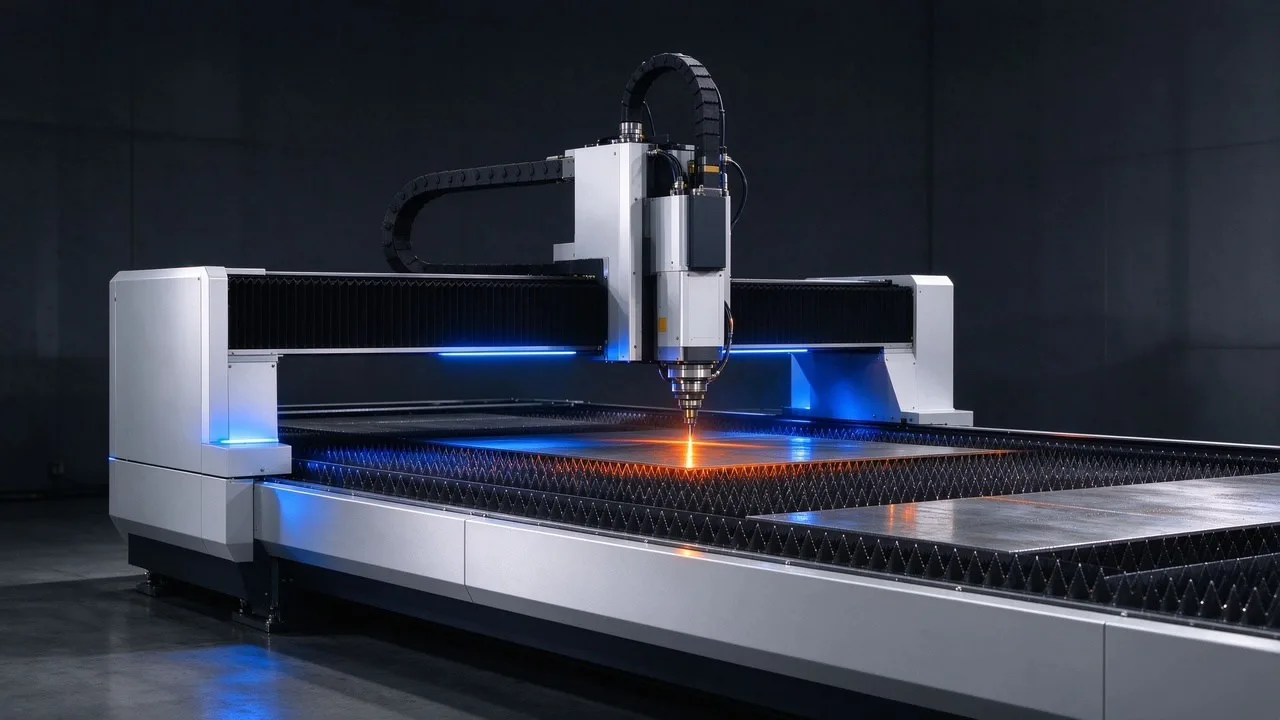
A practical comparison of vertical and horizontal machining centers covering spindle orientation, chip evacuation, multi-face work, cost and typical applications.
Buyers ask us this question almost every week: should I buy a vertical machining center or a horizontal one? The honest answer is that it depends on your parts, your batch sizes and your budget. Both machines remove metal with a rotating tool. The difference in how they are built changes everything else, from chips to cycle time to price. Here is how we help customers think it through.
Spindle Orientation Sets the Working Style
A vertical machining center (VMC) has a spindle mounted perpendicular to the table. The tool cuts downward into the top face of the workpiece. Loading and inspecting parts is easy because you look straight down at the table, which is why VMCs dominate job shops and mould work.
A horizontal machining center (HMC) has the spindle parallel to the table. The tool cuts into the side of the workpiece, and gravity pulls chips away from the cut instead of packing them into the pocket. On deep cavities or deep pockets, that alone can double tool life.
Chip Evacuation: The Real Day-to-Day Difference
On a VMC, chips fall onto the table and around the part. In deep pockets they get re-cut, which heats the tool and scratches the surface. You manage it with air blast, through-spindle coolant or a chip conveyor, but you are always fighting gravity.
On an HMC, chips drop straight into the chip pan. With a pallet changer and good coolant pressure, an HMC can run lights-out for hours without someone clearing chips. If your parts produce a lot of swarf, this is the single biggest argument for going horizontal.
Multi-Face Work and the Fourth Axis Question
A standard VMC machines one face at a time. To reach four sides of a block you flip the part, which costs setup time and loses datum accuracy. Adding a fourth-axis rotary table helps, and a right-angle head can reach side faces on larger parts, but each setup is still a chance for error.
An HMC with a rotary table or a two-pallet system can machine four faces in one setup, and some shops run five or six sides with accessories. For parts with features on multiple faces, the HMC often cuts total cycle time by 30% or more compared with repeated VMC setups. That figure is an illustration, not a guarantee; it depends heavily on your part mix.
What the Cost Difference Looks Like
As a rough guide, a horizontal machining center of similar size and configuration costs meaningfully more than a vertical one, commonly 1.5 to 2 times the price, because of the pallet system, stiffer structure and chip management hardware. Fixture costs are also higher: you build fixtures for each pallet face.
A VMC is the lower-risk entry point. For example, a typical VMC850 class machine in the Chinese market, with about 800/500/500 mm travels and a BT40 spindle, is listed on major B2B platforms in a wide range, with mainstream configurations clustering in the US$20,000-33,000 band. That is a listed range across the market, not a VITOP quotation; ask us for a formal quote on your configuration.
Typical Applications for Each
| Factor | Vertical machining center | Horizontal machining center |
|---|---|---|
| Best parts | Flat plates, moulds, dies, single-face brackets | Multi-face prismatic parts, pump and valve bodies, manifolds |
| Batch size | One-offs to medium batches | Medium to high volumes |
| Chip conditions | Needs air blast or coolant to clear pockets | Gravity-assisted, good for deep cavities |
| Setup style | Simple vises and fixtures, easy access | Pallet fixtures, more engineering up front |
| Budget | Lower entry cost, lower fixtures cost | Higher machine and fixture cost, lower cost per part at volume |
A Quick Way to Decide
- If you cut one face at a time, work on plates or moulds, and want the lowest entry cost, buy a vertical machining center.
- If your parts have features on four sides, produce heavy chip loads, or you need unattended running at volume, a horizontal machining center will pay back the higher price.
- If you are unsure, send us the part drawings. We look at feature positions, batch size and material, then tell you honestly which machine type fits.
At VITOP Machinery we build both C-frame vertical machining centers for mould, 3C and general machining, and horizontal machining centers in our 30,000 m2 production base, with casting, machining, assembly and laser inspection under one roof. Every machine is verified with laser interferometry and ballbar testing before shipment.
Talk to VITOP Machinery
Planning a machine purchase or need help matching a model to your parts? Send your drawings or questions to vitopmachinery@163.com, or message us directly on WhatsApp: +86 183 1908 0212. You can also browse all machines at www.vitopmachinery.com. We reply within one business day.