What Is a Drilling and Tapping Center? When to Buy One
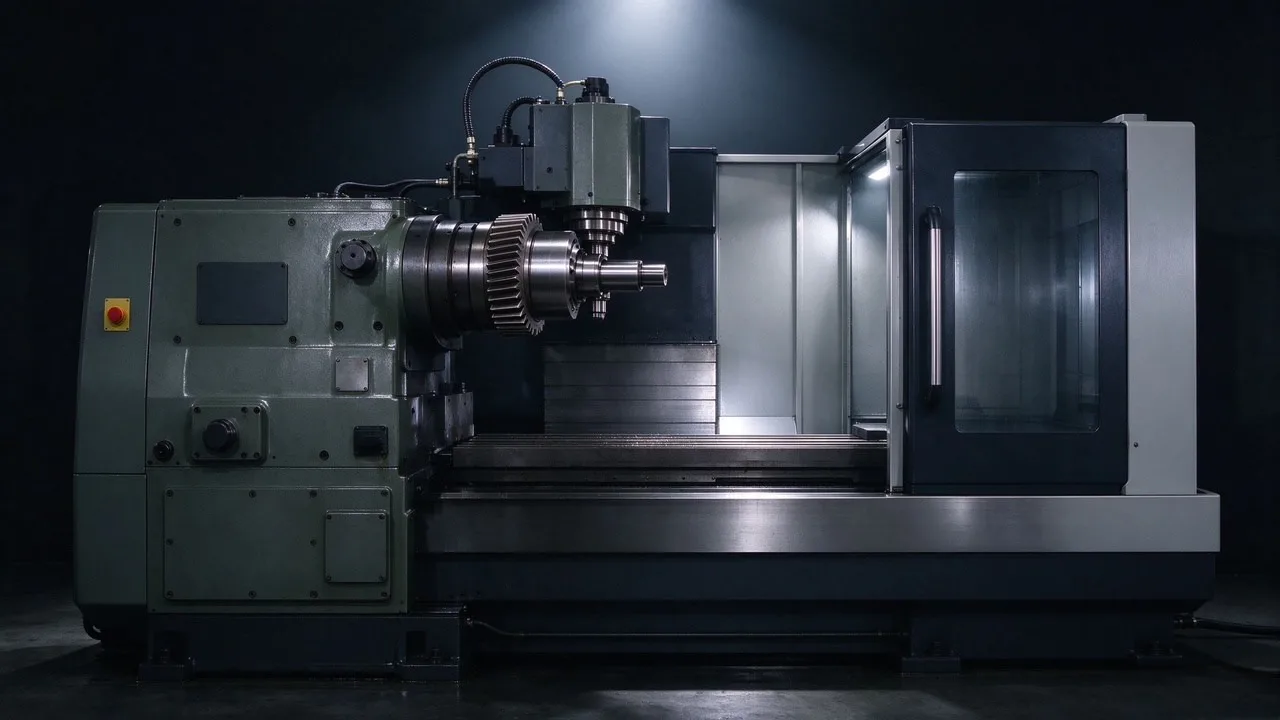
What a drilling and tapping center is, how high-speed spindles plus light cutting fit 3C and electronics parts, and when a DTC beats a full VMC on cost per hole.
If your parts are full of M2 to M6 tapped holes, thin walls plus small pockets, you may be paying for a machining center that is far heavier than the job needs. A drilling and tapping center (often shortened to DTC machine) is built for exactly that work. It looks like a small VMC, but almost every design choice serves one goal: putting thousands of small holes in parts as fast and as cheaply as possible.
What a Drilling and Tapping Center Actually Is
A DTC machine is a compact vertical machine with a small work envelope, a high-speed spindle plus tool changes measured in seconds. Compared with a general-purpose VMC, it typically has:
- A spindle that runs to 10,000-12,000 rpm or higher, often directly driven, for small-diameter drills plus taps.
- Rapid traverse rates well above a standard VMC, commonly 36-48 m/min, because most of the cycle is rapid positioning between holes.
- Tool-to-tool change times around or under 1.5 seconds, which matters when the cycle includes 100 tool changes.
- A compact footprint and lower machine weight, which saves floor space plus freight.
High-Speed Spindles and Light Cutting
The DTC philosophy is light cutting at high speed. Small drills and taps last longer and run faster when the spindle turns quickly and the machine accelerates smoothly between positions. The spindle is optimised for small tools, not for a 63 mm face mill. If you try heavy roughing on a DTC, you will find its limit quickly; the structure is built for agility rather than brute force.
This is also why drilling and tapping centers use efficient chip management and through-spindle coolant on small tools: the whole machine assumes continuous small-hole production, shift after shift.
Typical Parts: 3C and Electronics
The classic DTC customers are in the 3C and electronics supply chain. Think phone and laptop housings, heat sinks, brackets, jigs plus fixtures, light fittings, small aluminium plates with grids of holes, and hardware for door locks plus appliances. The common features are many small holes, shallow milling, moderate tolerances plus aluminium or low-carbon steel as the main material.
If your parts look like that list, a drilling plus tapping center was designed for you. If your parts are mould cavities, big structural plates or heavy steel blocks, it was not.
Cost per Hole: Where the DTC Wins
Cost per hole is where the DTC earns its place. On a full VMC, a hole-heavy cycle spends most of its time on rapids and tool changes, using a heavy machine's strength for nothing. A DTC does the same cycle faster, and the machine itself costs less to buy, power plus house.
- Lower purchase price: a DTC in the Chinese market generally sits well below a comparable full VMC, so for the same budget you can often buy two DTCs instead of one VMC and double throughput on small parts.
- Higher output per shift: fast rapids and fast tool changes shorten hole-heavy cycles substantially; on parts with hundreds of holes the cycle time difference is dramatic.
- Lower running cost: smaller motors, smaller floor space, and tooling that lasts longer because the spindle speed suits the tool diameter.
As an illustration, for a shop drilling plus tapping thousands of M3-M5 holes per day in aluminium brackets, the cost per finished hole on a DTC is routinely a fraction of the same work on a general VMC, once machine cost plus cycle time are both counted. Your exact numbers depend on your parts, so it is worth running the calculation on one real drawing before deciding.
When You Should Still Buy a Full VMC
A drilling and tapping center is a specialist, and specialists lose when taken outside their field. Buy a full VMC instead if:
- Your parts need heavy roughing or large-diameter milling.
- Workpieces are large or heavy relative to the DTC's table and travels.
- You need deep pockets with tough chip evacuation, or rigid boring of large diameters.
- Your product mix is genuinely mixed; one well-specified VMC can cover more variety, at the price of slower hole production.
Many 3C and precision parts shops end up with both: a DTC running hole-heavy small parts at volume, and a VMC for the heavier jobs. VITOP Machinery builds drilling and tapping centers alongside our vertical machining center line in the same 30,000 m2 production base, so we can tell you honestly which machine your drawings deserve. Every machine leaves after laser interferometry and ballbar testing, and OEM or ODM configurations are welcome.
Talk to VITOP Machinery
Planning a machine purchase or need help matching a model to your parts? Send your drawings or questions to vitopmachinery@163.com, or message us directly on WhatsApp: +86 183 1908 0212. You can also browse all machines at www.vitopmachinery.com. We reply within one business day.