Why Southeast Asia Imports Most of Its Machining Centers
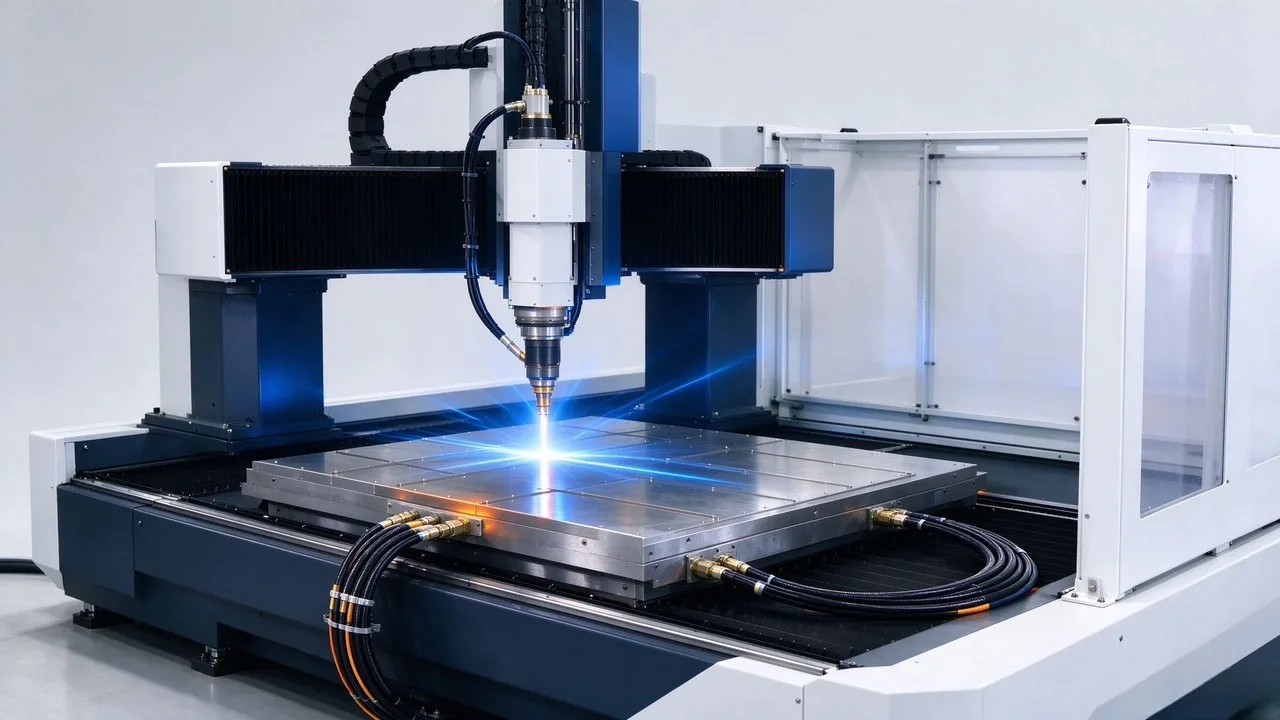
Roughly 70-75% of vertical milling machine demand in Southeast Asia is met by imports. What that dependency means for buyers choosing suppliers and planning service.
Ask a workshop owner in Bangkok, Ho Chi Minh City or Jakarta where his machining centres were made, and the answer is usually another country. That is not a matter of taste. It is the result of how the region's manufacturing base has developed, and it shapes every buying decision you will make in Southeast Asia.
The 70-75% Import Reality
Across Thailand, Vietnam, Indonesia and the Philippines, roughly 70-75% of vertical milling machine demand is met by imports. Local production exists, but it is small in scale and concentrated at the low end. For anything beyond basic drilling and milling, the region relies on machines built elsewhere: from China, Taiwan, Japan and Korea, with Europe at the premium end.
That dependency is not necessarily a weakness. It means Southeast Asian buyers have access to the full global range of machines and prices, often at better terms than buyers in markets with protected local industries. But it also means every purchase is an import project, with everything that involves.
Part of the answer is history. Building machining centres needs heavy casting, precision scraping and years of accumulated process knowledge, and for decades the region's industrial policy put its money into assembly and light manufacturing instead. Local shops that do build machines mostly serve the entry segment, where price beats precision. Meanwhile the factories that came to the region, and the local mould, automotive and electronics suppliers that grew around them, needed capable machines quickly, so imports filled the gap and still do.
Where China Fits In
China sits firmly in the mid-range of that global supply: better specified and cheaper than entry-level local builds, below Japanese and European machines on price, and increasingly competitive with them on mainstream specifications. A typical Chinese VMC850-class machine carries a BT40 spindle at 8000-10000 rpm, a 24-tool magazine and laser-verified geometry, at a fraction of the price of an equivalent Japanese machine.
Quality varies between factories, of course. The mid-range label covers both serious manufacturers with in-house casting and assembly, and traders who bolt together bought-in parts. Your job as a buyer is telling them apart, because the difference shows up two years later, not on delivery day.
What This Means for Supplier Selection
- Look for a factory, not just a seller. Casting, precision machining, assembly and inspection under one roof is a strong signal. So is a track record of 13+ years of continuous production.
- Ask about verification. Serious builders test every machine with laser interferometry and ballbar testing before shipment, and will share the reports.
- Check certifications. ISO 9001 is a minimum; VITOP, for example, also holds ISO 14001 and ISO 45001.
- Compare quotations like for like. Two offers for a "VMC850" can differ by thousands of dollars in controller, guideway type and spindle brand. Ask for the specification list behind each price.
Plan Your Service Before You Buy
Because your machine crosses a border, service planning matters more than it does for a domestic purchase. Before you order, get clear written answers on four things: installation and commissioning (who comes, and who pays flights and hotel), spare parts shipping times, English-language manuals and fault codes, and remote support by video call.
A tropical workshop brings its own issues too. High humidity accelerates corrosion and stresses electrical boards, and voltage fluctuation is common, so ask about sea-freight rust protection and whether the supplier recommends a stabilizer for your site. Coolant also needs closer attention in heat.
Deal with a manufacturer that exports worldwide and has answered these questions hundreds of times, and the import process becomes routine rather than risky.
Import dependency in Southeast Asia is not going away soon, and for buyers it is mostly an opportunity: the world's machine tools compete for your order. Choose the supplier with the same care you choose the machine.
Talk to VITOP Machinery
Planning a machine purchase or need help matching a model to your parts? Send your drawings or questions to vitopmachinery@163.com, or message us directly on WhatsApp: +86 183 1908 0212. You can also browse all machines at www.vitopmachinery.com. We reply within one business day.