Factory Acceptance Test Before Shipment: What to Ask to See
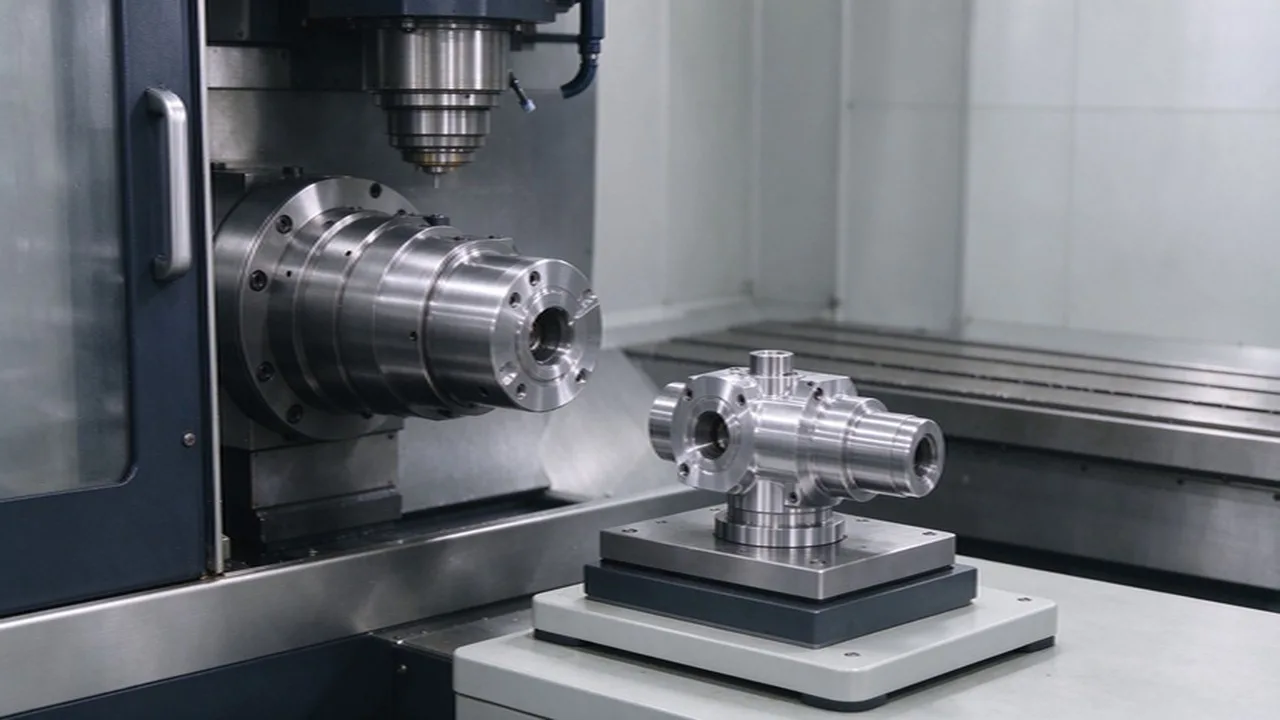
A factory acceptance test is your last chance to catch problems before the crate closes. Here is what to see, live or on video.
Once a CNC machine is crated and on the water, correcting problems becomes slow and expensive. The factory acceptance test, usually called the FAT, is your chance to catch issues while the machine is still on the builder's floor. Whether you travel to China or witness remotely, the structure of a good FAT is the same. This article lists what to see, in what order, and what evidence to take home.
When the Test Should Happen
Schedule the FAT after assembly and alignment are complete but before packing. Agree the date in the contract, with final payment tied to it. A machine tested weeks before payment gives you leverage; a machine tested after full payment gives you none. Builders used to export orders, like VITOP Machinery with its 13+ years of experience, will normally build the FAT into the order schedule without argument.
The Core Test Sequence
1. Machine Identity and Documentation
Check the serial number on the machine against the contract. Ask to see the geometric test report of this specific machine, per the ISO 10791 series, plus the laser interferometry and ballbar results. Reports without a matching serial number prove nothing.
2. Geometric Verification
Witness the laser measurement along each axis, or review the recorded data with the metrology staff. Ask which values are positioning accuracy and which are repeatability, and for which accuracy grade. Standard VMC figures of ±0.01 to 0.02 mm are typical, with precision grade around ±0.005 mm.
3. Spindle and Axis Run
Run the spindle at low, medium and maximum speed and hold each for several minutes. Listen for noise changes and watch temperature. Cycle all axes through full travel at rapid feed several times. This shakes out loose couplings, guide tight spots and coolant leaks early.
4. ATC and Tool Changes
Load the magazine with tools of varied weight and cycle every pocket. Watch tool change time and listen for hard impacts. A tool magazine that misbehaves on day one rarely fixes itself.
5. The Test Cut
This is the step buyers skip and should not. Ask the factory to machine a test piece, ideally one representative of your parts. A standard approach uses a circular interpolation test, a bore, a facing pass and a step pocket, then measures the result on a CMM or with a bore gauge in front of you. Ask to keep the measured piece with the report.
Witnessing Remotely
If travel is not practical, insist on a live video call rather than a recorded clip. Ask the camera to show the control screen while the machine runs, so you can watch load meters, position readouts and alarms. Recorded video is easy to stage; a live call where you request movements on the spot is far harder to fake. Record the session on your side and screenshot the readouts.
Bring in a Third Party If the Stakes Are High
For larger orders, an independent inspector adds credibility. Third-party factory inspections and FAT witnessing by firms such as SGS or BV typically cost several hundred to about USD 1,500 depending on scope, and they know exactly what to check. They cannot replace your own technical questions, but they document facts independently.
What to Do With the Results
Put the acceptance criteria in writing before the test: which accuracy figures, which test pieces, which tolerances. If a value fails, the machine stays for correction and re-test, and the packing date moves. That clause, agreed early, turns the FAT from a formality into real protection. Machines that pass cleanly ship with confidence; machines that get waved through at the last minute become someone else's problem, and that someone is you.
Talk to VITOP Machinery
Planning a machine purchase or need help matching a model to your parts? Send your drawings or questions to vitopmachinery@163.com, or message us directly on WhatsApp: +86 183 1908 0212. You can also browse all machines at www.vitopmachinery.com. We reply within one business day.
Need a CNC Machine for Your Project?
Tell us what you need to machine — our engineers will recommend the right model and send a quotation within 24 hours.