HT300 Resin-Sand Castings: The Foundation of Accuracy
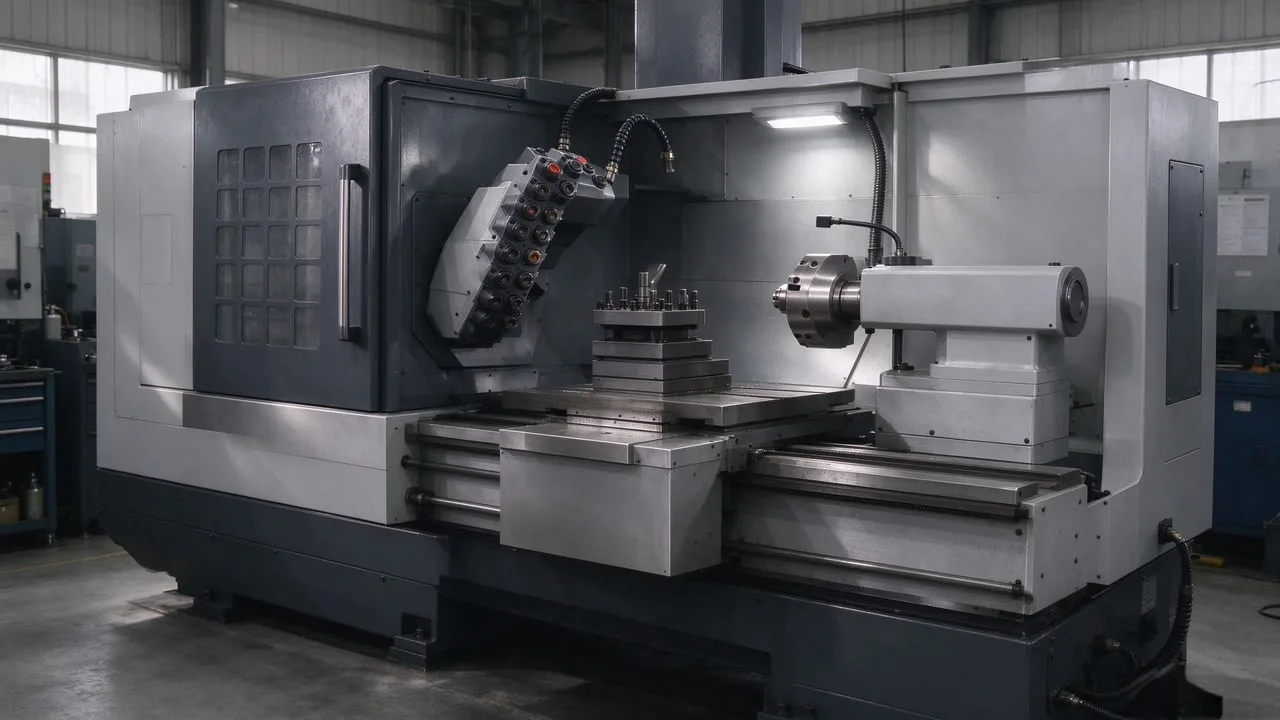
Machine accuracy starts in the foundry. How HT300 resin-sand castings with double ageing give a CNC machine its stability.
Every accuracy claim a machine builder makes rests on one thing below the spindle: the casting. At VITOP Machinery, machines are built on HT300 resin-sand castings with double ageing treatment, and the casting, machining and assembly all happen on the same 30,000 m2 production base. Understanding why that combination matters will help you read supplier specifications with a sharper eye.
What HT300 Means
HT300 is a high-grade grey cast iron, the number referring to a minimum tensile strength of 300 MPa. Higher-grade grey iron gives the machine bed and column more rigidity and better vibration damping than common lower grades. Grey iron is chosen for machine structures because it absorbs vibration rather than transmitting it, which directly affects surface finish on the parts you cut.
Cheaper machines often use lighter structures or lower casting grades. The difference rarely shows on day one. It shows in month eighteen, when a machine has lost alignment and another still holds geometry.
Why Resin-Sand Moulding Matters
Resin-sand casting uses a chemically bonded sand mould instead of the traditional green sand process. The practical differences that matter for machine tools:
- Dimensional control: resin-bonded moulds hold shape better during pouring, so wall thickness and internal ribs come out closer to design intent. The machinist starts with a truer blank.
- Surface quality: cleaner as-cast surfaces reduce the risk of inclusions and porosity in critical areas.
- Complex internal structures: ribs and hollow sections that give a bed its stiffness can be cast more reliably, which is how modern beds achieve rigidity without excessive weight.
When the foundry is inside the factory, as it is at VITOP, quality feedback runs both directions: machining can tell casting about a porosity trend the same week it appears, instead of a month later through a supplier.
Why Double Ageing
Castings leave the mould full of internal stress. Iron poured at over a thousand degrees cools unevenly: thick sections cool slower than thin ones, and the result is a locked-in stress pattern that will slowly distort the part over months if left alone. For a machine bed holding micron-level geometry, that drift is unacceptable.
Ageing treatment relieves these stresses by cycling the casting through controlled heating and cooling. Doing it twice, with rough machining between the cycles, is the key. Rough machining cuts away material and redistributes stress, so the second ageing pass removes the stress that the first pass and the machining together introduced. After that, the structure is stable enough for finish machining and scraping.
Builders who skip or shorten this step ship machines that hold tolerance when new and drift within the first year. No amount of laser compensation at the factory can fix a casting that keeps moving. The compensation map entered into the control corrects for systematic error, but a casting that relaxes over months produces error that changes shape, which compensation cannot follow.
Questions to Ask Any Supplier
- Which casting grade do you use for the bed, column and saddle? Get the actual grade, not "high quality cast iron".
- Is the foundry in-house or a subcontractor, and how is casting quality inspected before machining?
- How many ageing cycles are applied, and at which stage of machining?
- Can you show casting and machining of the structure on a live factory video call?
- What wall thickness and rib pattern do you use in the bed, and how does it compare with heavier or lighter alternatives?
A builder with casting, precision machining, assembly and inspection under one roof answers all four from direct knowledge. That integration is exactly what buyers should weigh when a quote looks cheaper than the rest.
The casting is the one component you cannot upgrade later. Spindles, controls and tool changers can be replaced or configured; a bed that distorts cannot. Ask about the foundry before you argue over the controller brand.
Talk to VITOP Machinery
Planning a machine purchase or need help matching a model to your parts? Send your drawings or questions to vitopmachinery@163.com, or message us directly on WhatsApp: +86 183 1908 0212. You can also browse all machines at www.vitopmachinery.com. We reply within one business day.
Need a CNC Machine for Your Project?
Tell us what you need to machine — our engineers will recommend the right model and send a quotation within 24 hours.